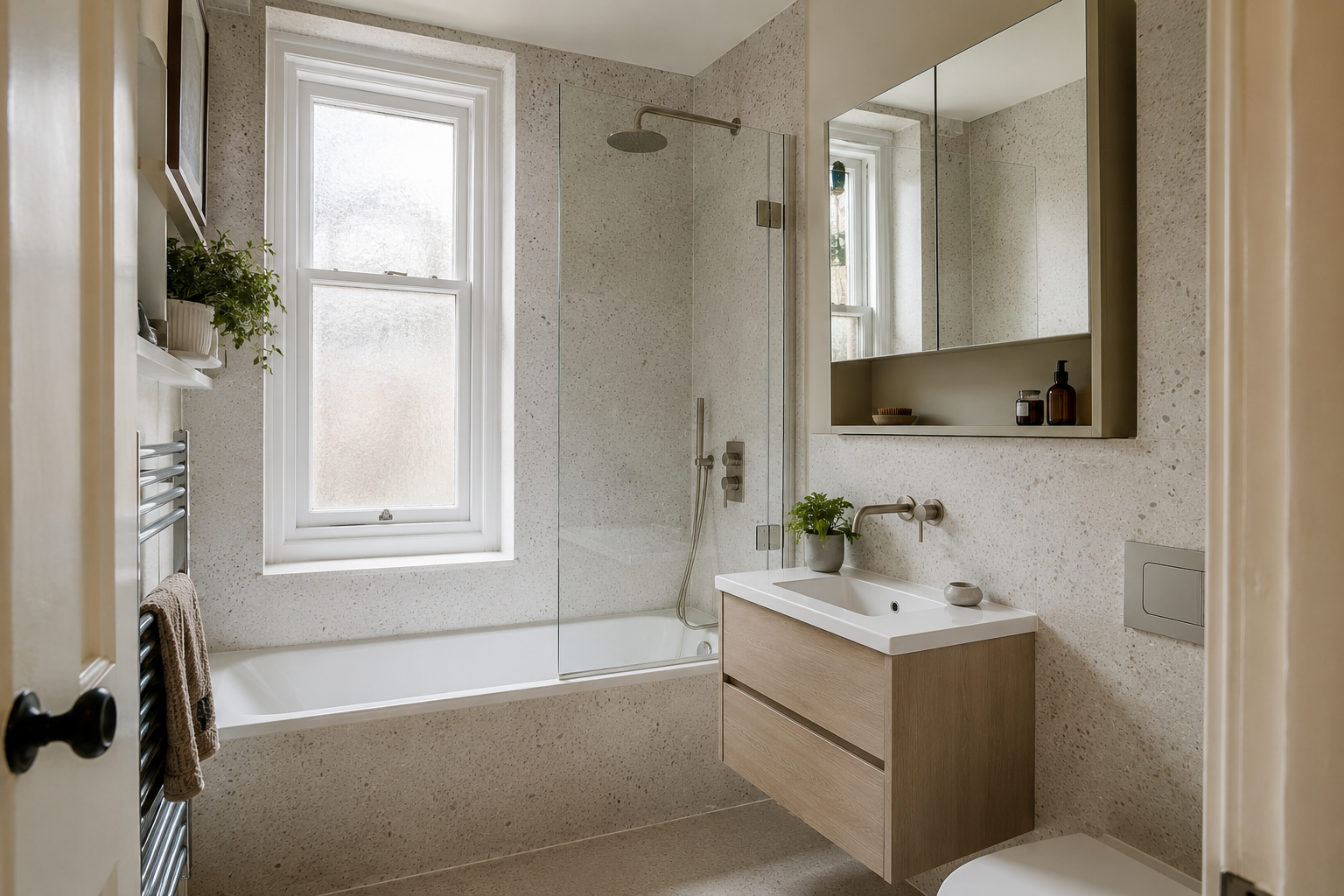
Start with the Materials That Will Stay
If you are keeping the bath, floor or vanity, use those items as the starting point for the panel colour. An existing white bath may look warmer or cooler than a white sample beside it. A grey floor can contain blue or brown tones that only become obvious next to the new wall. Take the sample into the room rather than trying to remember the colours in a showroom. This makes it easier to choose a combination that works without replacing sound fittings simply because the first panel you liked clashes with them.
Look at the Sample at Different Times
Bathroom colours change with daylight, ceiling lights and mirror lighting. Hold the panel upright where it will be fitted and look at it in the morning and evening. A sample laid flat on a table receives light differently from a shower wall. If the room has no window, judge it under the lighting you expect to use. Do not choose only from a phone image because screens can alter colour and brightness. A few checks in the actual bathroom are more useful than a colour name such as warm white or natural stone.
Light Colours Are an Option, Not a Rule
Pale panels can make a compact room feel bright, particularly with a simple floor and good lighting. They are not the only choice. A darker shower wall may work well if the rest of the room has enough contrast and light. Think about whether you want the wall to stand out or sit behind the fittings. Avoid treating small bathrooms as if they all need exactly the same white finish. The room’s shape, window position, furniture and your own preference should guide the decision, alongside practical checks on visibility and cleaning.
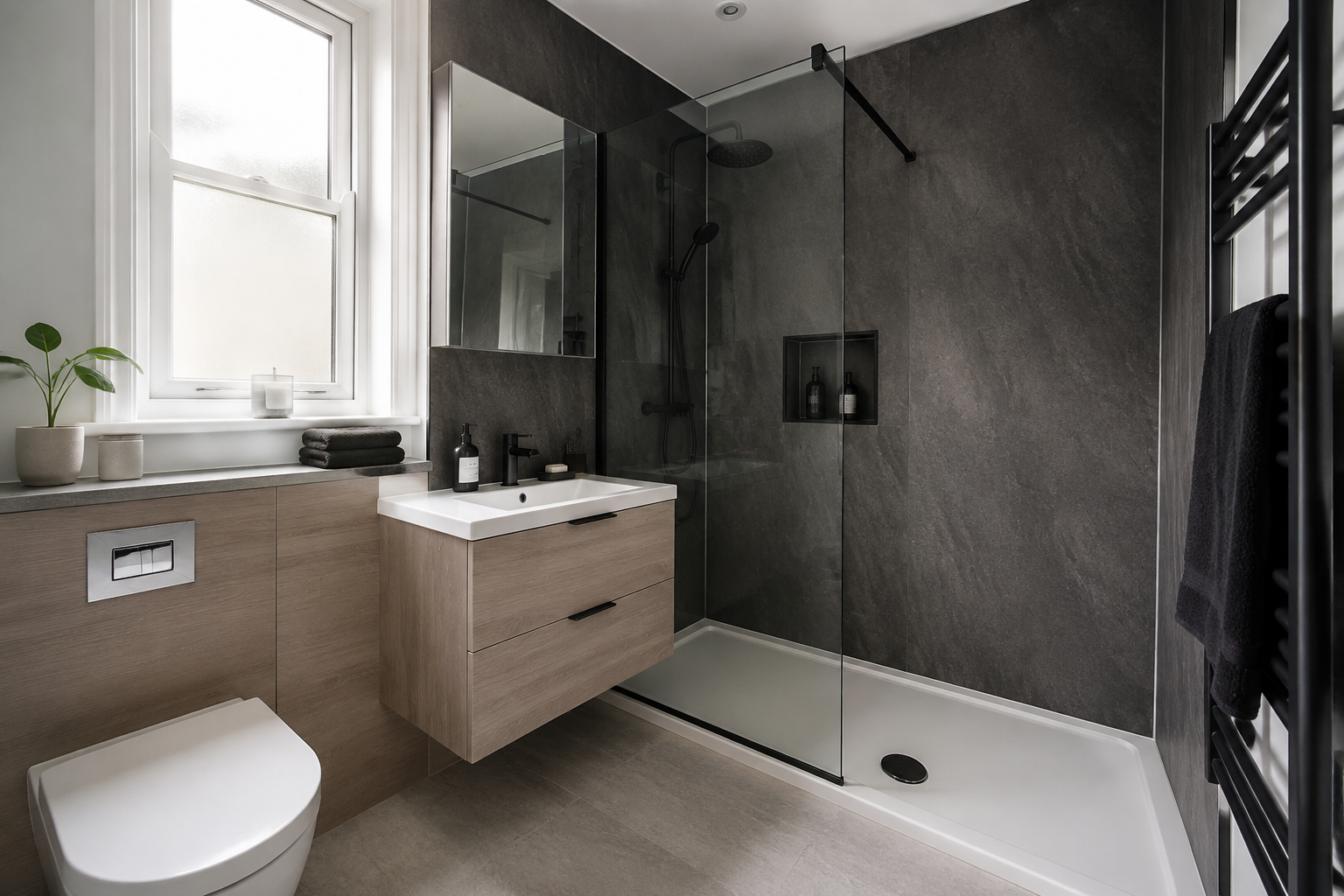
Balance the Amount of Pattern
Colour and pattern need to be considered together. A pale marble panel with large dark veins can look busier than a plain mid-tone board. Terrazzo flecks, tile lines and wood grain also become more noticeable when repeated across several walls. Compare a full-board image as well as the colour sample. If the floor already has a strong design, you may prefer a quieter wall. In a very narrow shower, check which part of the pattern will remain visible between the screen and controls, rather than judging it from a large showroom display.
Choose the Vanity and Wall Together
A wood or coloured vanity can add contrast without covering the whole bathroom in pattern. Place a furniture sample or accurate product image beside the panel and floor. Check the colour of the worktop and basin too, because they sit directly against the wall. It is often easier to coordinate a small number of main finishes than to choose every item independently. That does not mean everything must match. A deliberate contrast can work well, provided the combination still looks clear when the mirror, towel rail and daily toiletries are in place.
Check Gloss, Matt and Texture
The same colour can look different in a glossy, satin or matt finish. Gloss reflects more of the room and may show stronger highlights from lights and windows. A matt face can give a softer appearance, while texture changes how shadows fall across the panel. Handle a sample and read its cleaning instructions. Think about water marks near the shower and how easily you can reach the surface. The right choice is not just the shade you prefer; it is the combination of appearance and everyday care that suits the way the room is used.
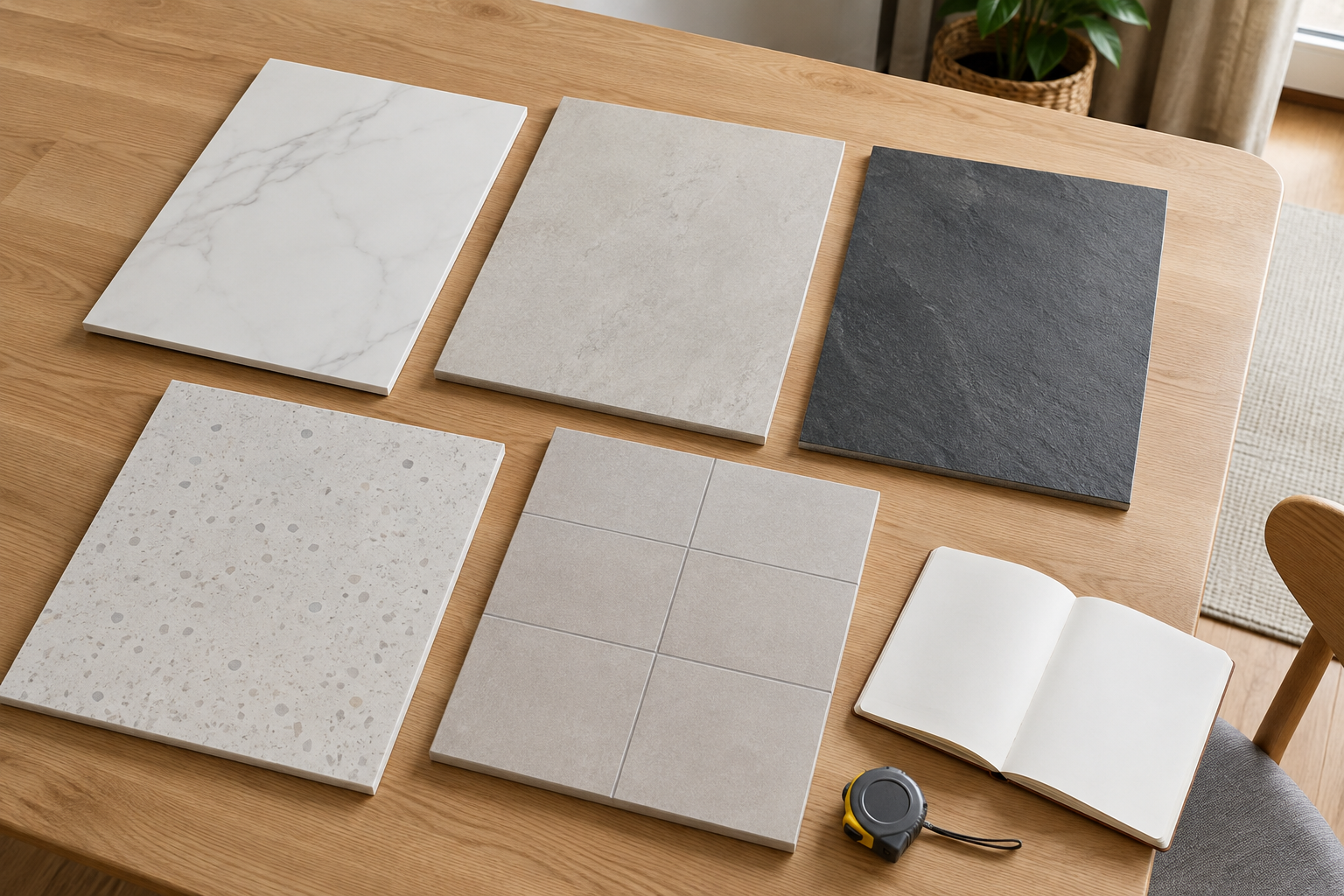
Use Lighting to Support the Choice
A darker panel beside the mirror may need more useful lighting around the mirror than a pale wall. Check where shadows fall when standing at the basin, not only whether the room looks attractive from the door. Ceiling lights and a mirror light do different jobs. Any changes to bathroom electrics need suitable professional planning and fitting. You do not need an elaborate lighting scheme to compare colours well, but you do need to know which lights the finished room will have. Choosing panels under temporary lighting can give a misleading impression of the final result.
Try a Smaller Area of a Strong Colour
If you like a bold green, charcoal or blue but are unsure about using it everywhere, compare a shower feature wall with full-room coverage. Keep the remaining finishes suitable for their positions and plan the join between panels and painted walls. A smaller amount of strong colour can still be visible from the doorway. Check that the exposed panel ends have a tidy finish and that splash areas remain properly protected. This approach is a design option, not a shortcut around the preparation and sealing that the chosen panel system requires.
Confirm the Combination Before Ordering
Bring the chosen panel, floor, vanity and metal finishes together one last time. Check the product code as well as the colour name and confirm the board pattern, trim colour and coverage in the quote. Keep a photograph of the agreed samples for your own reference, while remembering that the physical sample is the better colour guide. A small bathroom does not need complicated styling to look good. Consistent choices, useful storage and a layout you can move around comfortably usually matter more than following a rule about one supposedly perfect colour.