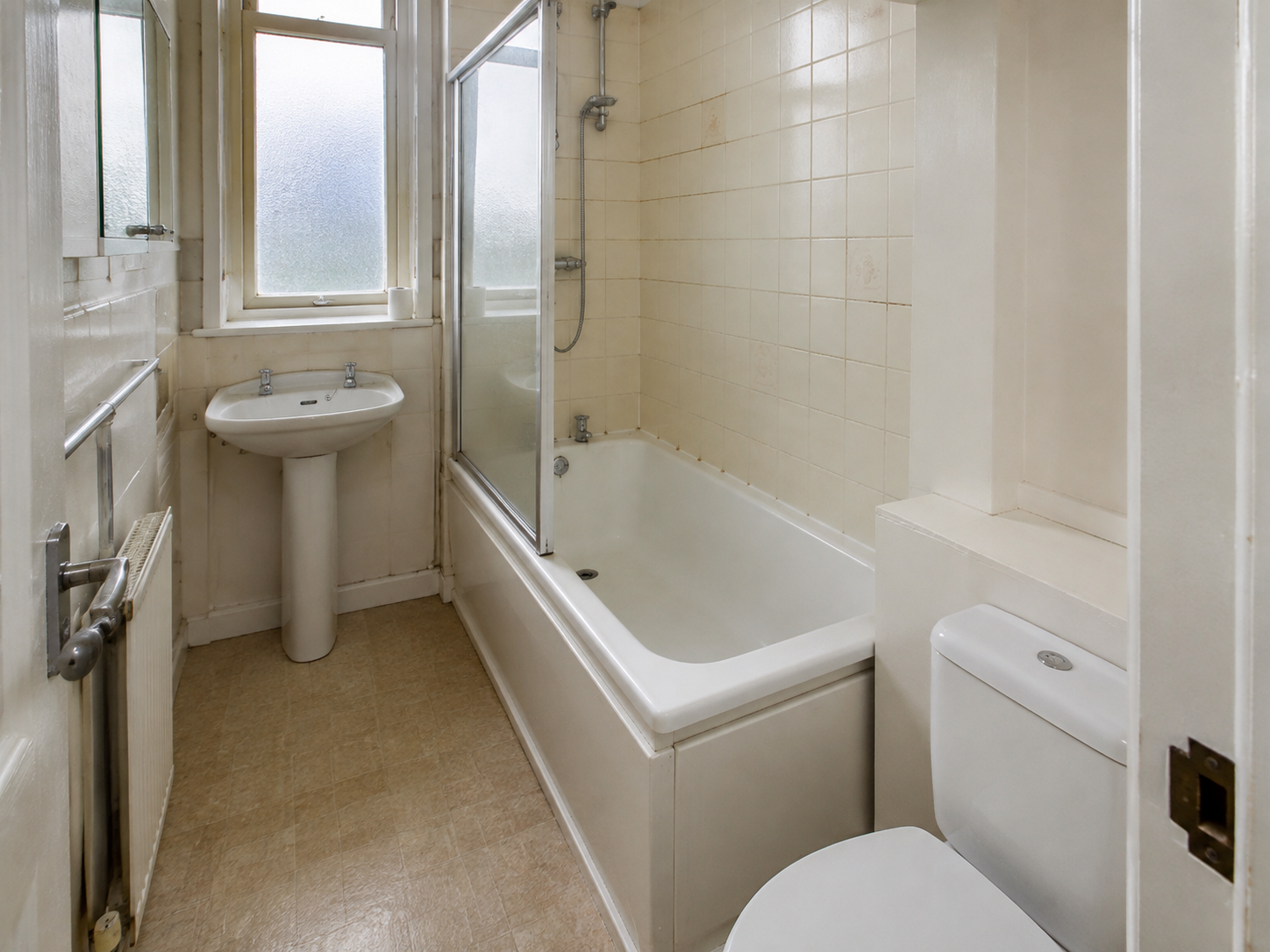
Do Not Judge Hidden Condition from the Face Alone
A panel can look clean while a problem exists behind it, and a visible mark on a seal does not automatically prove widespread hidden mould. The location, timing and other symptoms matter. Note any damp smell, swelling, loose edge or water appearing outside the shower. Take photographs and explain whether the issue changes after use. Avoid pulling the system apart yourself simply to look behind it. A suitable professional can assess the likely cause and decide what needs opening. The aim is to understand the problem rather than make a confident diagnosis from one surface mark.
Moisture Needs a Route or a Source
Water can reach the wall through a leak, a failed connection or another building problem. Persistent condensation may also be relevant to the room’s condition. The decorative panel face does not rule out any of those possibilities. Tell the person inspecting it about previous leaks, repairs and when the symptoms began. A useful investigation follows the evidence instead of assuming every damp area has the same cause. Covering the visible mark or replacing a board without addressing the source may leave the underlying problem in place and make it harder to understand later.
Check Visible Seals and Fittings Safely
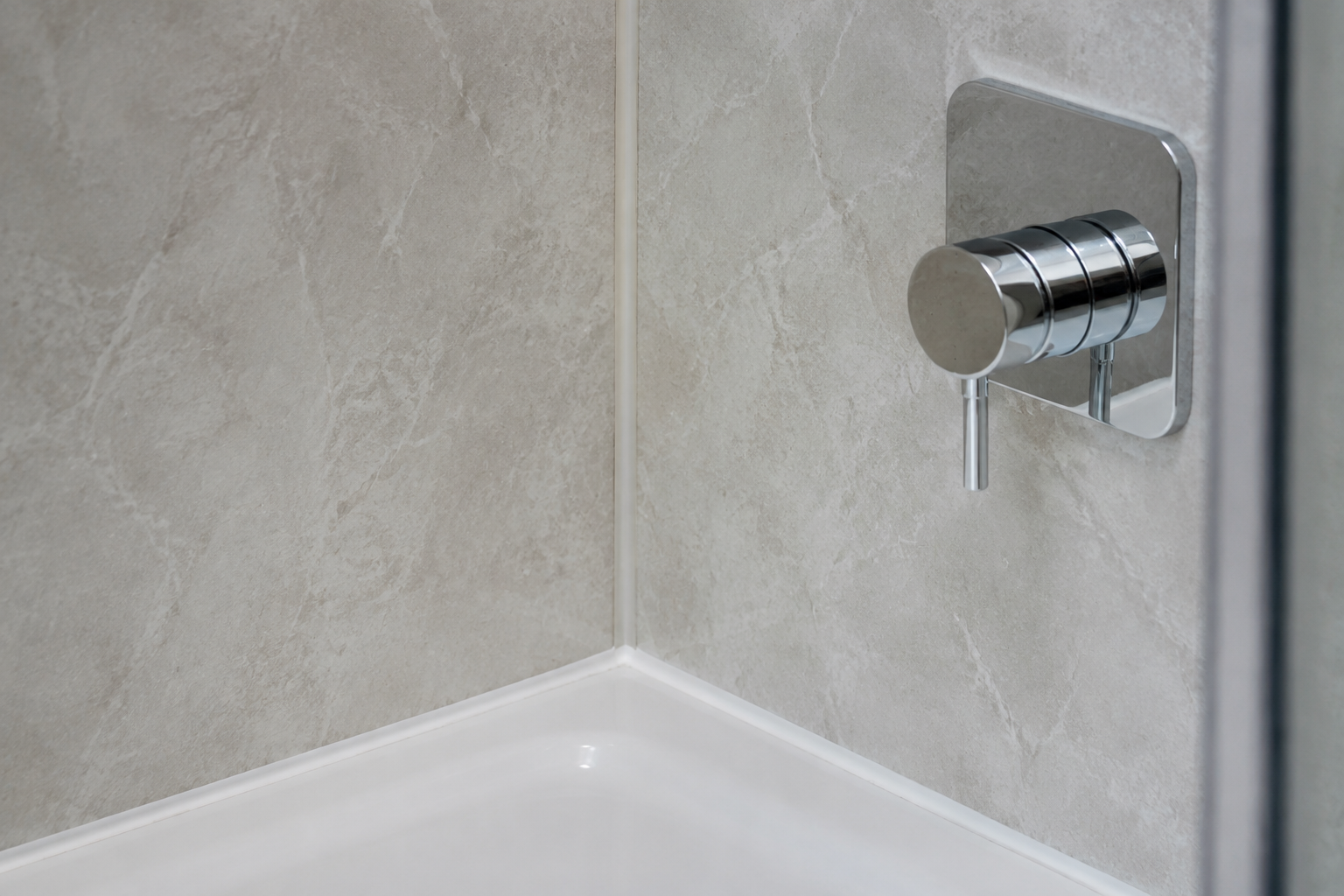
Look for gaps, lifted edges or repeated staining around the bath, tray, screen and pipe openings. Notice whether a fitting moves or water escapes during normal use. These observations can help the installer, but they are not a reason to poke, scrape or drill the wall. If an active leak is apparent, avoid use that worsens it and arrange appropriate help. Keep clear notes about what you have seen. The inspection should establish whether the issue is a surface maintenance problem, a failed connection or damage that requires access behind the panels.
Ventilation Is Part of the Wider Picture
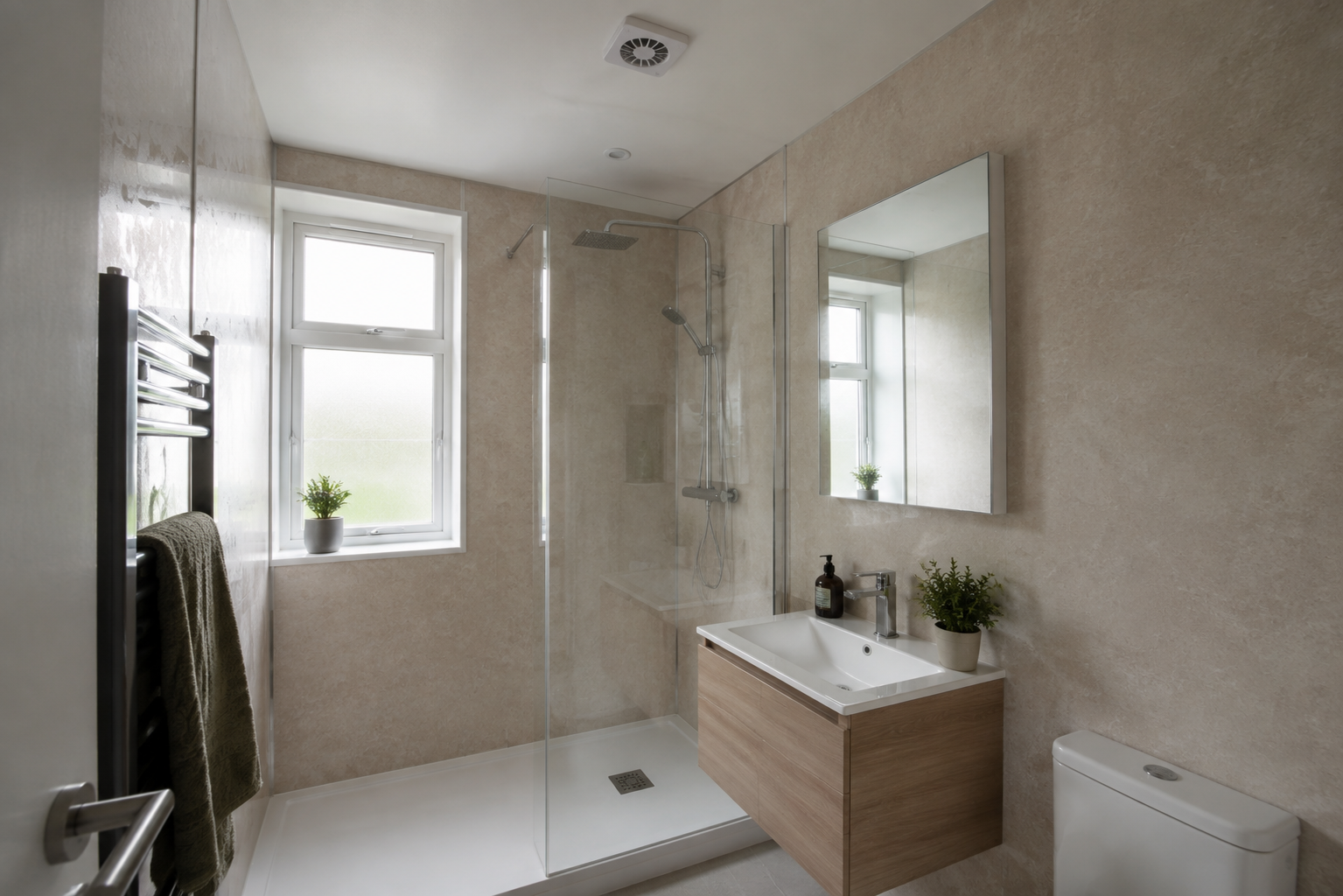
Panels do not remove moisture from the air. If the room stays damp, the extractor and airflow may need checking alongside possible leaks. Tell the assessor about condensation on other surfaces or staining that returns after cleaning. A fan that runs audibly is not proof that the complete ventilation route is effective. Appropriate professional checks can identify whether changes are needed. Improving ventilation may be part of the solution, but it should not be used to dismiss a separate plumbing or sealing fault. More than one issue can contribute to the condition of a bathroom.
Avoid Covering Stains Before They Are Understood
Painting over a mark, adding another board or applying more sealant can hide information without fixing the cause. If the problem is recurring, ask for an explanation before agreeing a cosmetic treatment. Existing damaged or damp material may need removal or other work before the surface is suitable again. The method depends on what is found and the products involved. A new panel should be fitted to an appropriate base, not used to close the wall quickly because the room looks untidy. Understanding the cause is the important step before choosing the replacement finish.
Get Appropriate Help for Significant Mould
Where mould is extensive, keeps returning or raises health concerns, seek suitable professional advice about the building problem and safe treatment. The household’s circumstances can affect what is appropriate, so a general bathroom article should not prescribe a universal cleaning method. Avoid mixing chemicals or using products that the panel manufacturer forbids. If you are concerned about health symptoms, seek medical advice. The practical role of the fitter is to explain the installation and any building or plumbing repair within their competence, while other specialists may be needed for a wider damp or health issue.
Agree What Must Be Opened and Repaired
If investigation requires removing panels, ask which boards, trims and fittings need to come out. Joined systems or screens may make the work larger than the visible damaged area. The repair plan should explain the moisture source, affected materials and the conditions needed before the wall is closed again. Ask how additional findings will be shown and priced. Keep photographs where provided and record the agreed changes. A clear explanation helps you distinguish necessary repair from optional replacement of a wider decorative area, especially if matching the original panel is difficult.
Refit with the Correct System Details
Once the cause and affected wall have been dealt with, the replacement installation must follow the chosen product’s instructions. That includes appropriate joints, cut-edge treatment, openings and the connection beside the bath or tray. Ask whether the original product can be matched and whether any fittings need better support. Do not assume the repair is complete merely because a fresh board has been installed. The work should restore the intended wall system and address the reason moisture reached the wrong place. Keep the updated product and care information for future reference.
Watch for Returning Symptoms After Repair
Resume use only after the advised waiting period for the fitted products. Use ventilation as instructed and observe the repaired area during normal cleaning. Report recurring smells, staining, movement or escaping water promptly with clear photographs and dates. Avoid repeated cosmetic repairs that leave the same pattern unexplained. The useful outcome is not simply a clean-looking wall on handover day. It is a bathroom where the moisture problem has been identified, the necessary work completed and the household knows what to maintain and whom to contact if the symptoms return.