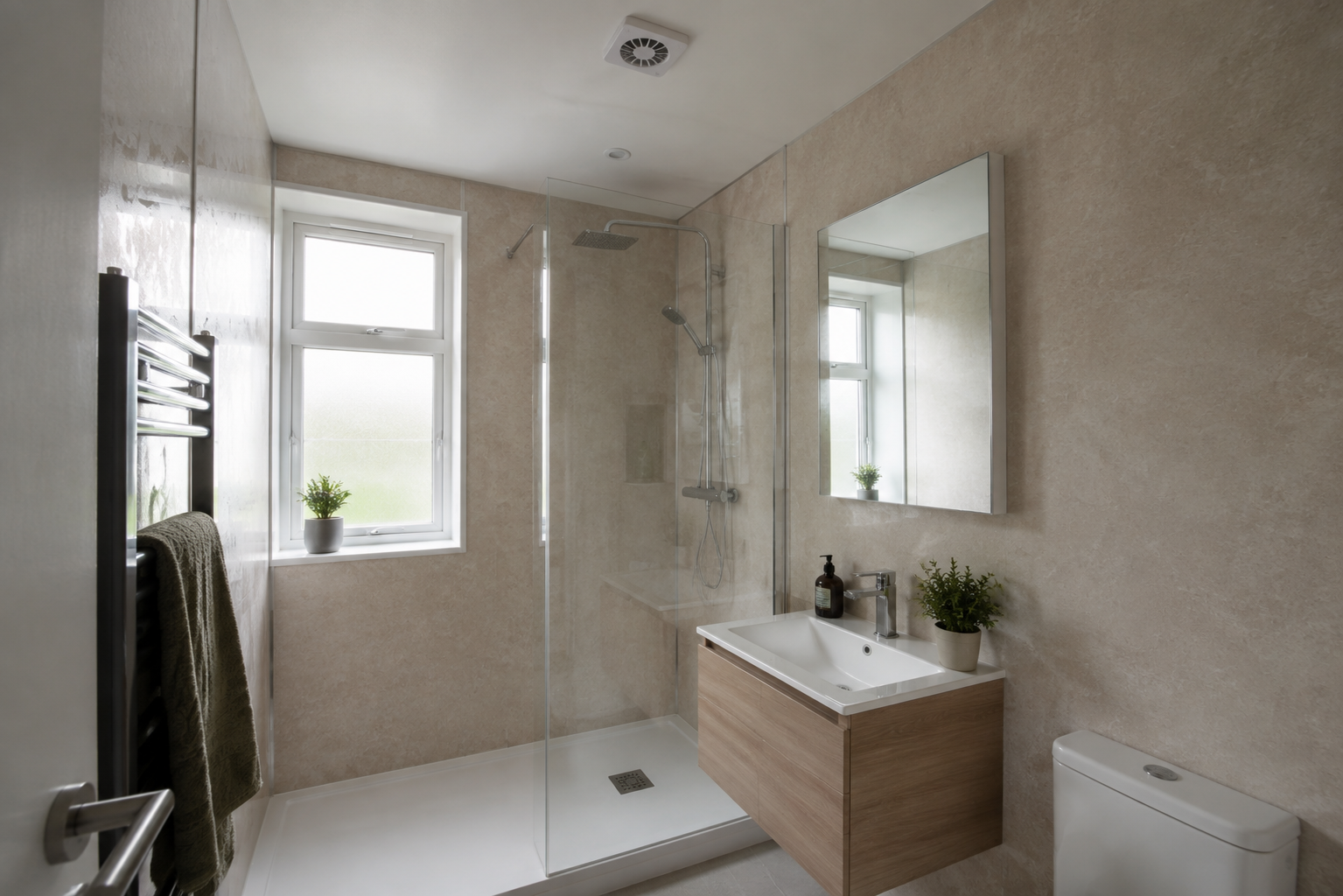
Understand Why Surfaces Become Wet
Baths and showers add moisture to the air. When that moist air meets a colder surface, water can collect as condensation. A misted mirror after a shower is familiar, but persistent wet walls or returning staining deserve closer attention. The cause may involve ventilation, temperature, use of the room or a separate leak. Do not assume every damp mark has the same explanation. Note where it appears, when it happens and whether it dries between uses. Those observations help a suitable professional investigate rather than simply covering the visible surface with a new finish.
Panels Do Not Remove Moisture from the Air
Wet wall panels can provide a surface that is straightforward to wipe, but they do not extract steam. Painted ceilings, windows, furniture and the material behind poorly sealed edges can still be affected by moisture. Choosing panels should therefore sit alongside a ventilation check, especially during a refit. A waterproof face is not a promise that the whole room is immune to damp. Ask how the bathroom’s moisture will be managed after the work, rather than treating wall material as the only decision. Good preparation includes understanding the existing room’s problems before they are hidden.
Check How the Extractor Is Intended to Work
Find out when the fan runs, how it is controlled and where it discharges. A fan making noise does not by itself prove that it is moving moisture effectively. If performance seems poor, arrange an appropriate inspection of the unit and duct route. Keep accessible grilles clean according to the appliance instructions, but leave electrical work and inaccessible maintenance to qualified people. Tell the installer about long-running condensation before the bathroom is rebuilt. The correct solution depends on the room and system, so avoid choosing a replacement solely because its packaging describes it as powerful or quiet.
Allow the Planned Airflow to Operate
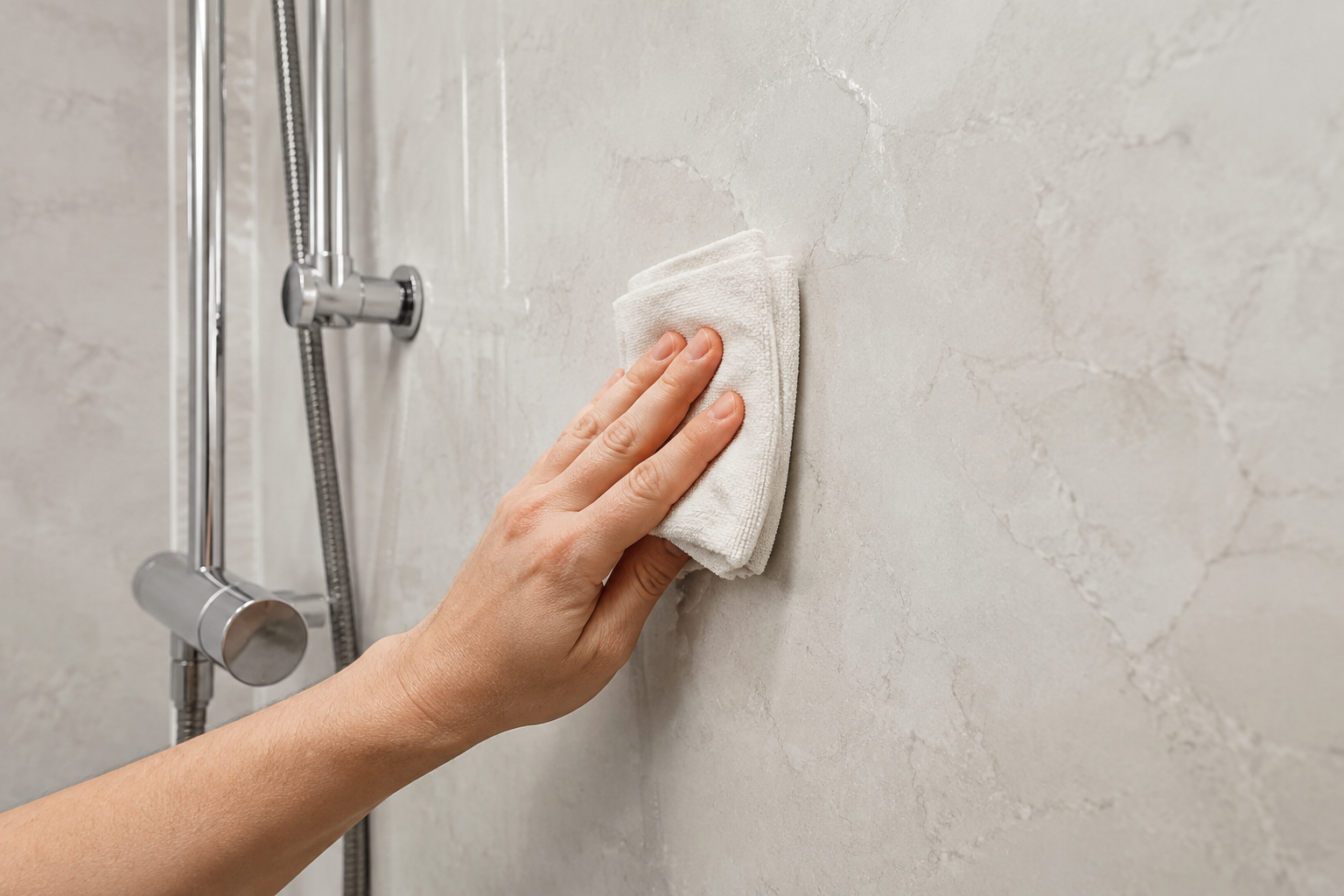
Extraction needs replacement air to work as intended. Room doors, vents and other openings may form part of the designed airflow. Do not block them simply to reduce a draught without understanding their purpose. Ask the person assessing the ventilation to explain how air enters and leaves the room. Opening a window can be useful in some situations, but it may not provide a reliable year-round routine for every household. The aim is a workable arrangement that people can use consistently, rather than a theoretical solution that is uncomfortable or impractical whenever the weather turns cold.
Look for Signs of a Separate Leak
A damp patch that follows pipework, appears below the bath or continues when the room has not been used may need investigation for leakage. Failed seals and loose fittings can also let water reach hidden areas. Record the pattern and arrange suitable help instead of assuming extra ventilation will fix it. If there is an active leak, avoid use that worsens it until it has been assessed. Ventilation and plumbing problems can occur together. A clear diagnosis matters because repainting, resealing or fitting panels over the mark may otherwise leave the original source unchanged.
Consider Cold Surfaces and Heating
Some surfaces stay cooler than others, particularly near external walls or windows. That can affect where condensation first appears. If problems persist despite appropriate use of the ventilation, ask for the room and building conditions to be assessed. Do not assume a wall panel will insulate the room sufficiently or solve a cold-surface problem by itself. Heating and ventilation should be considered together by someone qualified to advise on the property. The useful question is why the area remains wet and what work addresses that cause, rather than which decorative finish hides the stain most effectively.
Keep Routine Cleaning Gentle and Appropriate
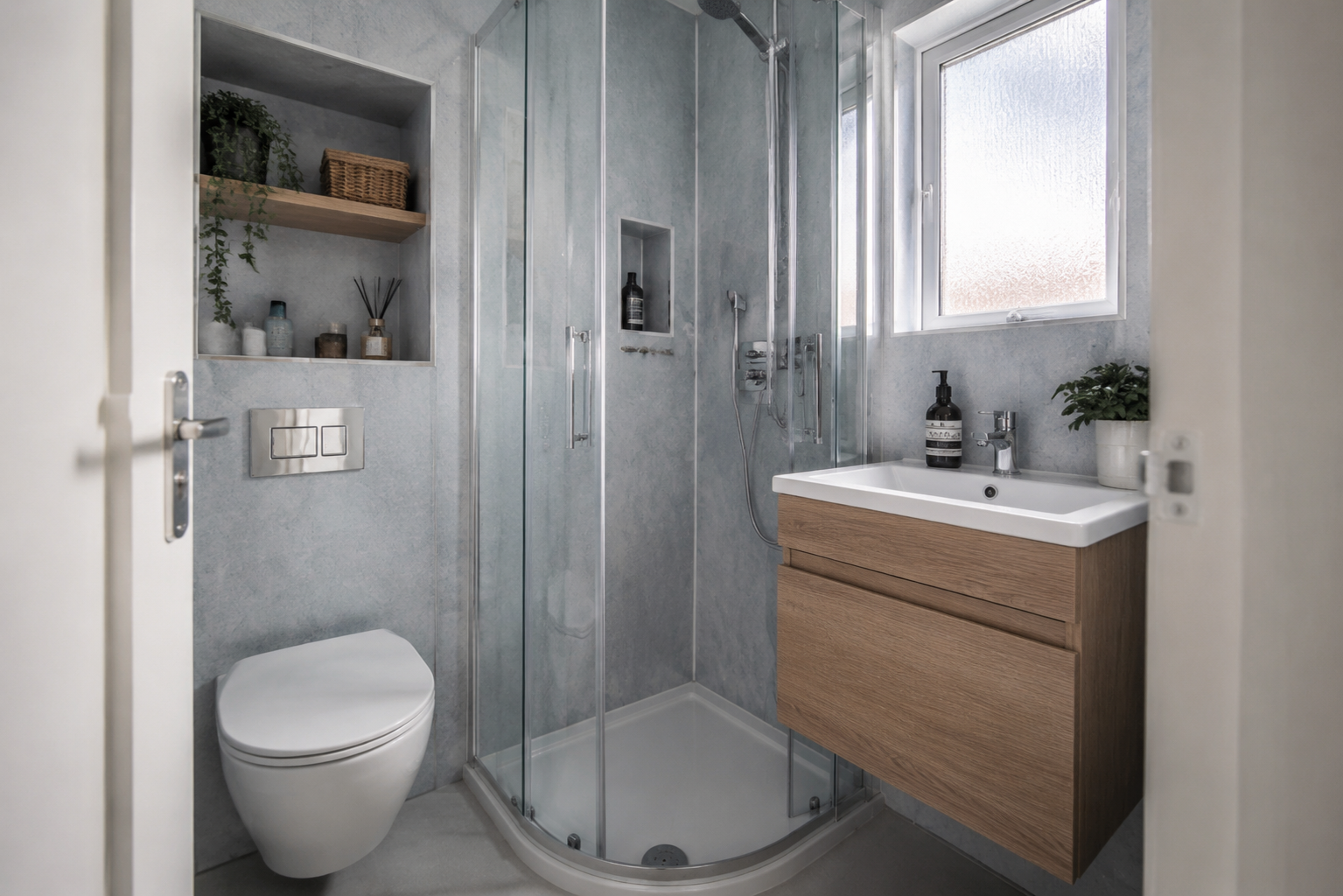
Follow the care instructions for the panels, seals and other surfaces. Wiping ordinary moisture or residue is different from treating extensive or recurring mould. If the problem is significant, keeps returning or may affect someone’s health, seek suitable professional advice about the building issue and cleaning approach. Avoid mixing cleaning chemicals or applying products that the surface manufacturer forbids. A strong cleaner may damage a panel without resolving the moisture source. Record where staining returns after cleaning so the pattern can inform an inspection rather than repeatedly treating each mark as an isolated housekeeping problem.
Include Ventilation in the Bathroom Quote
If the bathroom is being refitted, discuss extraction before panels and ceilings close up access. Ask whether the quote includes checking or replacing the fan, altering ductwork and any required electrical work. The agreed description should say what is being done rather than simply listing ventilation as a benefit. If work affects the building or shared arrangements, those requirements need checking too. Product selection, room layout and fitting order should support the ventilation plan. It is easier to coordinate these tasks as part of the project than to discover after handover that the new surfaces still become persistently wet.
Check the Result During Normal Use
After the work and any advised waiting period, observe how the bathroom behaves through ordinary baths and showers. Use the ventilation as instructed and report persistent wetness, returning stains or water outside the intended areas. Keep the fan and panel information with the installation documents. A bathroom does not need to be completely free of momentary mirror mist to work well, but ongoing moisture problems should not be dismissed because the wall finish is new. The useful outcome is a room that dries appropriately, remains comfortable to use and has any leaks or ventilation faults properly addressed.