Keep the Product Information Together
Save the panel range, colour reference, fitting details and care instructions with the bathroom quote. Include the information for the shower, screen, floor and fan because their maintenance may differ. If a product is replaced, update the record rather than relying on an old leaflet. This small collection helps you choose suitable cleaners and explain a problem to a contractor. It is particularly useful if the original installer is not the person carrying out a future repair. A maintenance routine is easier to follow when you know what has actually been fitted.
Wipe the Panels with Approved Materials
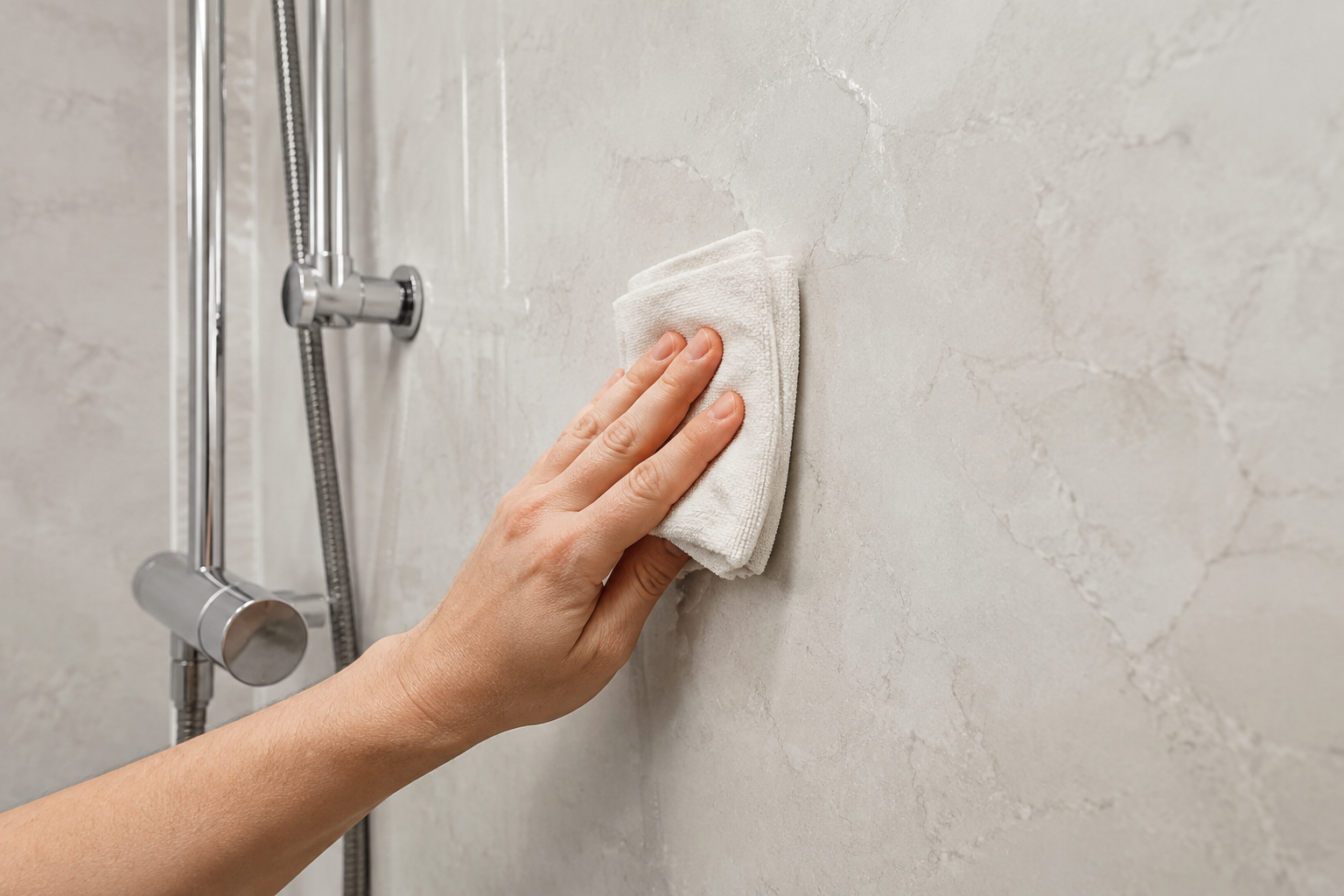
Use the cleaning method recommended for the exact range. A soft cloth and appropriate mild cleaner may be suitable, but check rather than assuming every face has the same restrictions. Clean around taps and screen edges where soap residue collects. Avoid abrasive pads or chemicals that the manufacturer warns against. Rinse or dry as directed so cleaner is not left on the surface. There is no need to turn every clean into a major inspection, but regular gentle care makes it easier to notice a new mark or change before it becomes hidden under heavy build-up.
Look at Corners and Board Connections
While cleaning, glance along the panel joints rather than only the broad panel faces. Look for gaps, lifting edges or changes in appearance. Printed tile lines are decorative; the actual board connections are the places that need attention. Do not pick at the seals or try to open a joint to see inside. If something looks different, take a photograph and compare it with earlier records if available. Report a change that persists or worsens. A simple observation can be useful to the fitter without requiring you to diagnose the exact cause yourself.
Check the Bath and Tray Edges
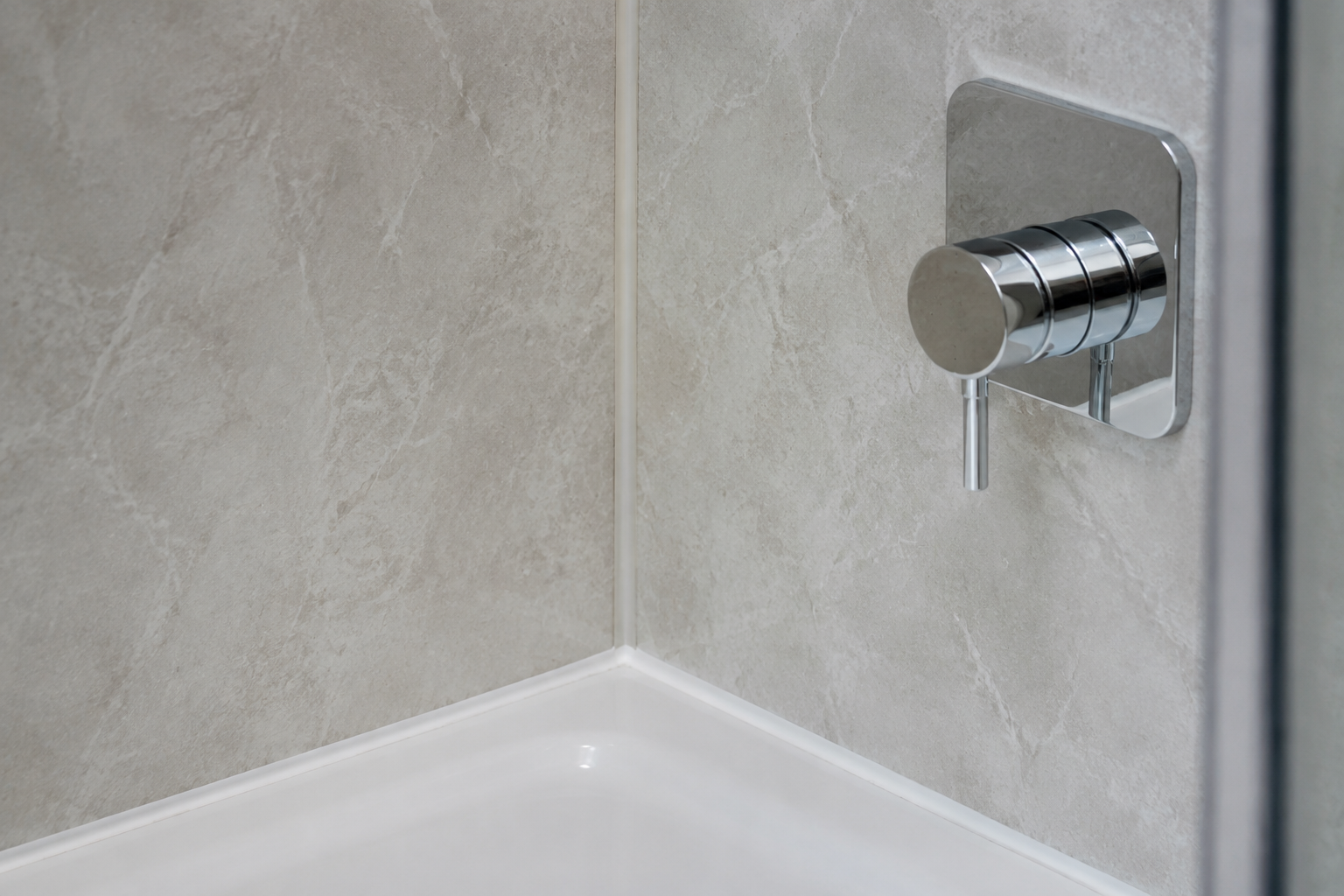
The lower wall connection is regularly exposed to water. Notice any split seal, movement or water escaping where it should not. Tell the installer if a bath or tray feels different under normal use. Repeated seal failure can have a cause beyond the sealant itself, so avoid simply layering more material over the old joint. Keep cleaning gentle around these edges and maintain access where possible. If an active leak is apparent, arrange appropriate help and avoid use that worsens it. A new panel face does not make the surrounding fittings immune to maintenance needs.
Keep Screens, Shelves and Rails Secure
Check the normal operation of the shower screen and whether accessories remain firm. Do not put extra loads on a shelf or rail beyond its intended use. Loose fittings can damage the panel or compromise a sealed opening. If something moves, ask for the fixing and support to be checked rather than tightening it blindly through the decorative face. Keep any product instructions for adjustable or folding fittings. The wall panel is part of a larger installation, and maintaining the connected items helps protect the openings and joints around them as well as the items themselves.
Use and Maintain Ventilation as Intended
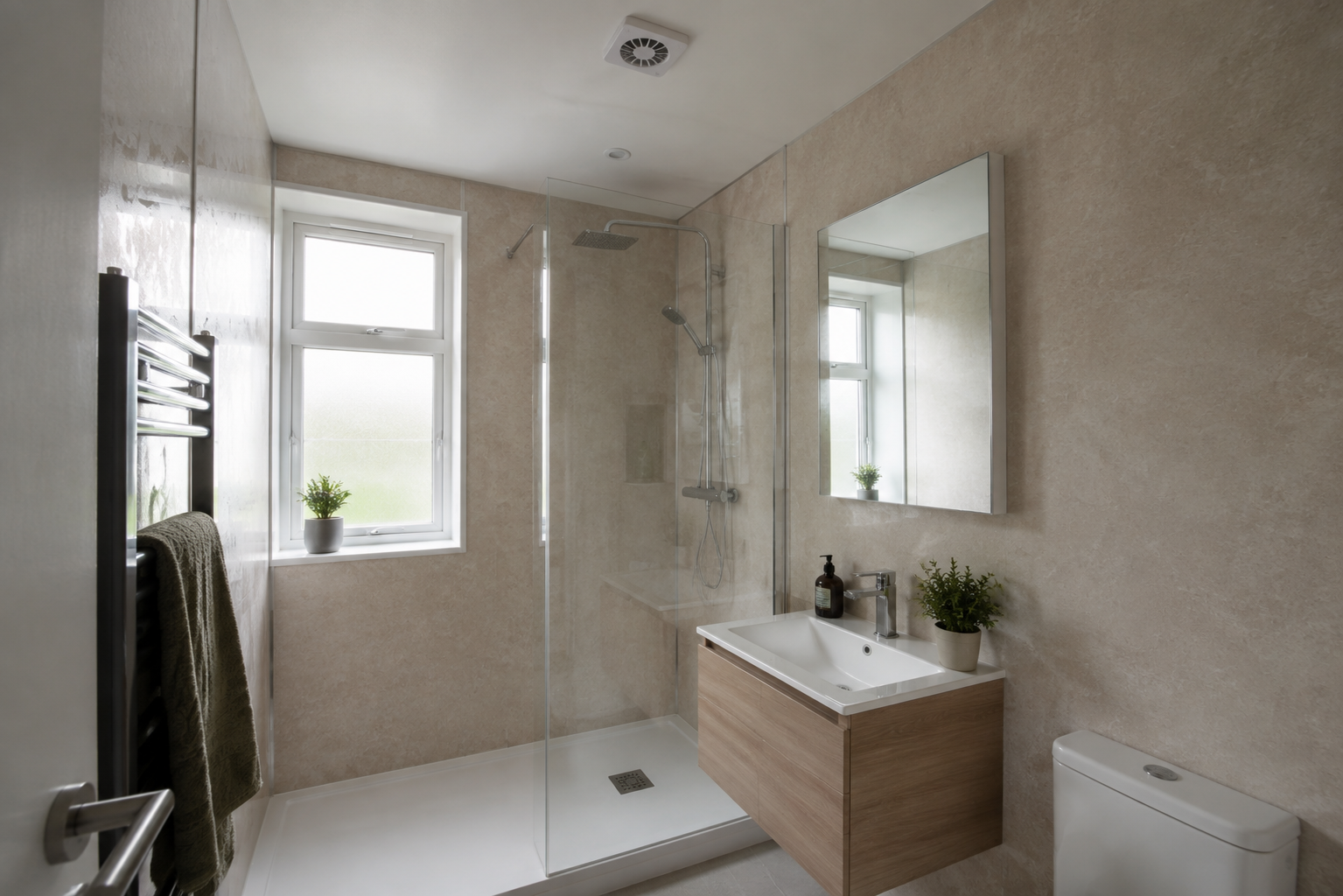
Follow the fan’s operating and cleaning guidance, keeping accessible grilles clear where it is safe to do so. Leave electrical work or inaccessible servicing to suitable professionals. Report persistent condensation, returning staining or a fan that no longer works as expected. The room needs to remove shower moisture even when its walls are easy to wipe. Do not block planned airflow without understanding its purpose. A ventilation problem can affect ceilings, furniture and hidden materials beyond the panel face, so it belongs in the maintenance routine rather than being treated as an unrelated issue.
Respond to Unusual Marks or Damage
A scratch, swelling and a damp smell are different observations. Record what you see, where it is and whether it changes after use. Find the product details before contacting the supplier or fitter. Avoid experimenting with strong cleaners, fillers or drilling to investigate behind the panel. A cosmetic mark may have an approved treatment, while a leak or damaged core needs a different response. If mould is extensive or returning, seek appropriate professional advice about the cause and treatment. The checklist helps you notice a problem; it is not a substitute for a proper assessment when one is needed.
Take Care When Adding New Accessories
A new hook, shelf or screen may require holes through the panel and a firm fixing in the wall behind it. Check the fitting method for the existing system before proceeding. Adhesive accessories also need compatibility checks and should not be assumed harmless to every finish. Avoid placing new items where they block cleaning or needed service access. If the wall was reinforced for particular fittings, keep a record of those positions. Changes after the original installation should preserve the intended support and sealing, rather than treating the decorative face as an ordinary surface that can be drilled or glued without thought.
Review the Room After Any Repair
Keep the description of the repair, replacement product details and new care instructions with your records. Ask when the repaired area can get wet and follow that waiting period. Once normal use resumes, watch for the original symptom returning. Confirm that screens and accessories still operate properly and that access points remain usable. Maintenance does not need complicated schedules or unrealistic promises that nothing will wear. A practical routine is to clean as instructed, notice changes, keep useful information and obtain appropriate help before a visible small problem is allowed to become a larger hidden one.