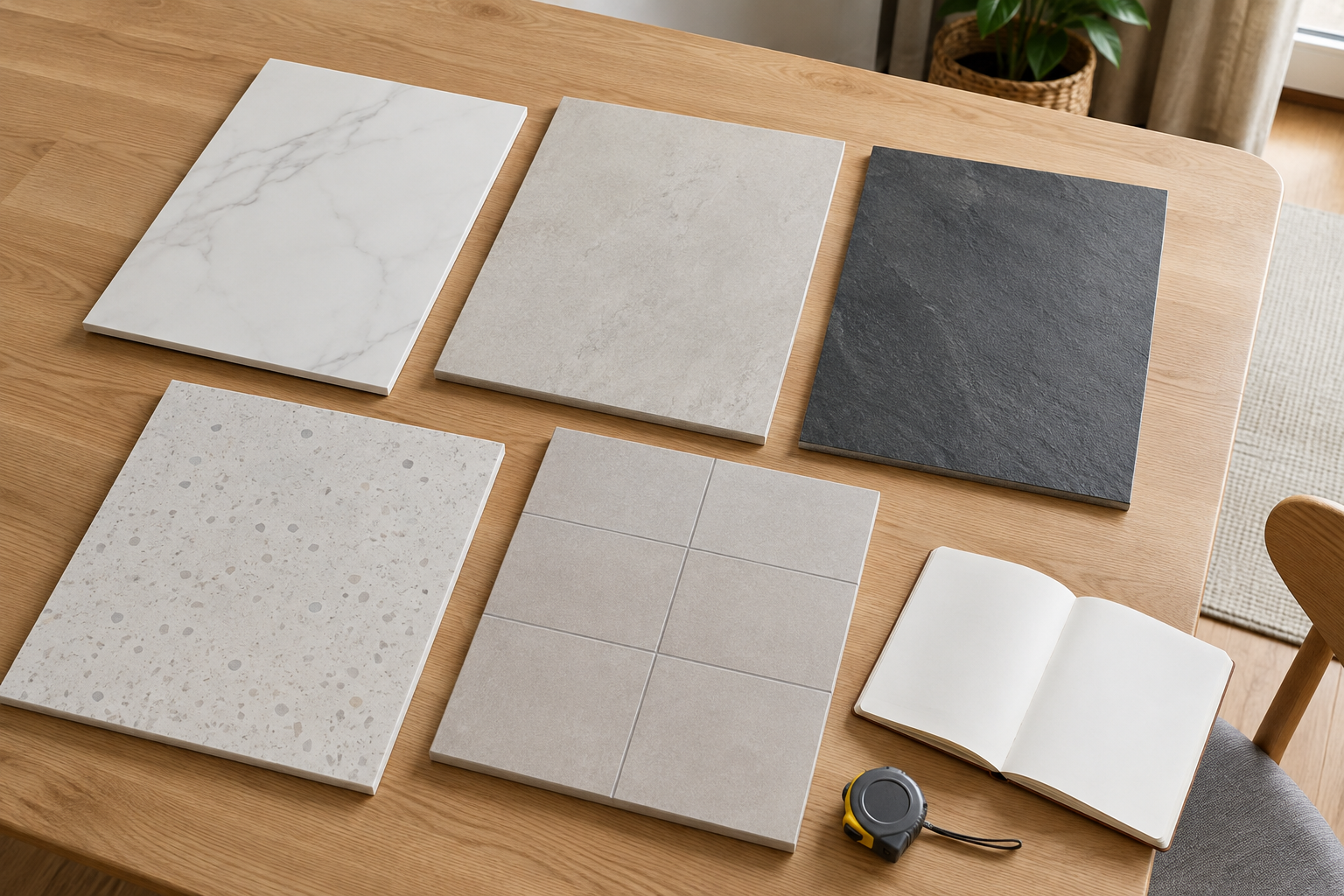
Know What a Small Sample Can Show
A sample is useful for checking colour, surface shine and texture. It may also show the board construction if its edge is visible. What it cannot always show is the complete pattern across a full sheet or the way several boards join. Treat it as one part of the decision rather than a miniature guarantee of the finished room. Ask whether the sample represents the exact range, finish and thickness being quoted. Similar product names can hide differences, so keep the label or reference attached while comparing several options at home.
Ask for a Full-Board View
Marble veins, terrazzo chips, tile grids and wood grain may repeat or change across a large panel. A hand sample can miss the strongest part of the design. Request a full-board image and, where available, a view of several fitted boards. Compare the pattern with the wall width and the positions of the mirror, screen and controls. Do not assume an attractive small section can be placed everywhere you want it. The available board design and cutting plan determine what will actually remain visible in the bathroom.
Stand the Sample Where the Panel Will Go
Hold or place it safely upright near the shower, bath and basin rather than judging it flat on a kitchen table. Look in daylight and with the bathroom lights on. A sample near a window may appear different from the same one in a darker corner. Glossy faces also reflect surrounding colours and objects. If the lighting will change, consider the intended fittings before making the final choice. The purpose is to see the panel as part of the room’s real conditions, not only under the bright, even light of a showroom display.
Compare It with the Floor and Vanity
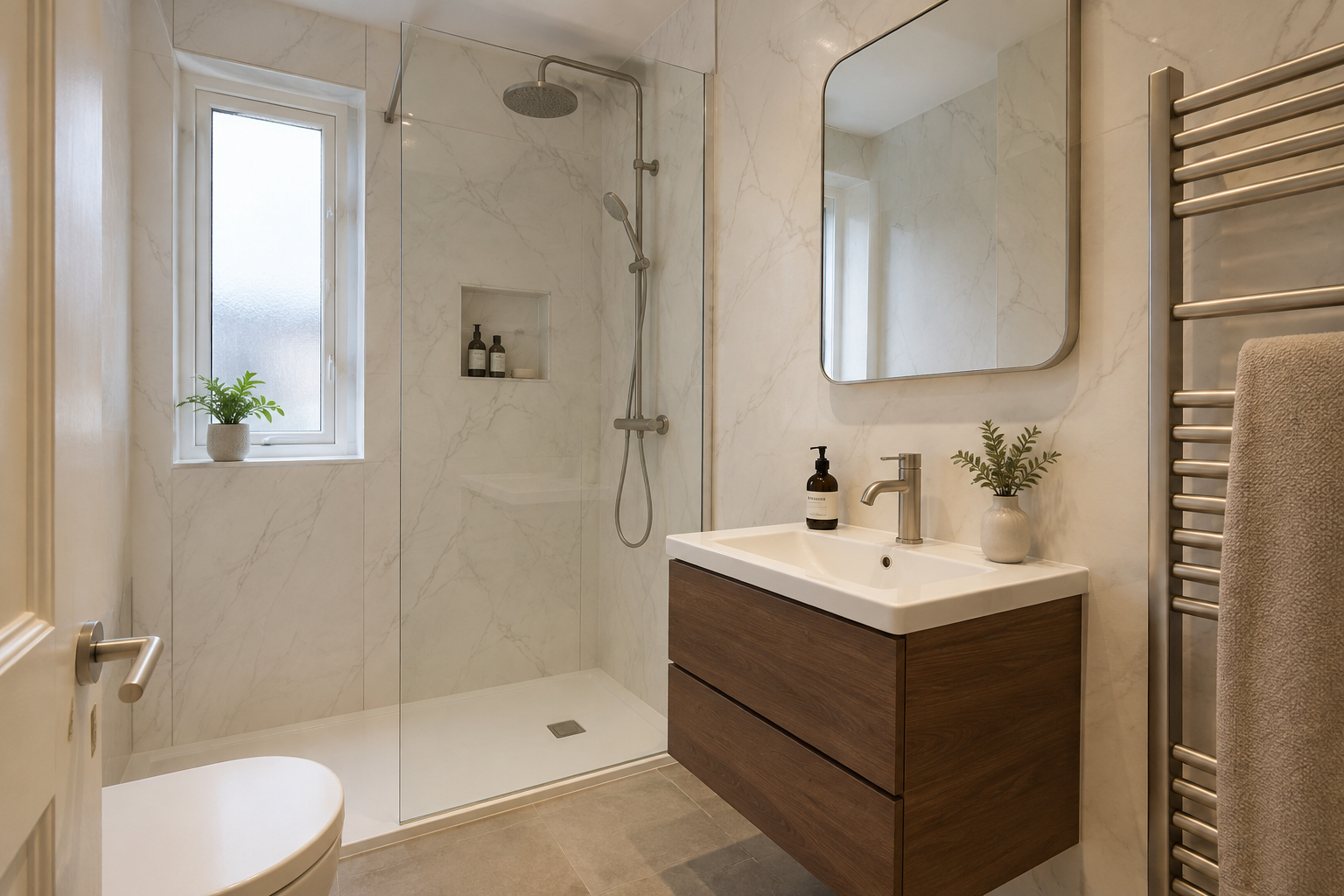
Put the shortlisted panel beside the floor and furniture samples. Include the colour of the bath or basin if those are staying. Look for warm and cool differences in whites, greys and beiges. Decide whether you want a close match or a deliberate contrast. A wood vanity and wood-effect wall may look inconsistent if their tones are almost, but not quite, the same. It is easier to change a sample choice than a fitted board. Bringing the main materials together early helps avoid separately attractive products becoming an unexpected combination after delivery.
Inspect the Texture and Cleaning Guidance
Touch the face and look closely at any ridges, recesses or printed tile lines. Ask how the exact finish should be cleaned and which products or tools are unsuitable. A surface that feels interesting on a sample may need more attention in a shower than a completely smooth face. Consider water marks and soap residue alongside appearance. Do not carry out aggressive cleaning experiments on a sample and assume the whole installation will behave the same indefinitely. The manufacturer’s care guidance is the proper basis for deciding whether the maintenance suits your household.
See the Matching Trims and Joints
Ask to view corner pieces, exposed-edge trims and any joining profile with the sample. Their colour, width and finish can change the appearance of the completed wall. A board with a shaped joining edge may have a different visible result from one using a separate strip. Check how windows and short ends are treated. A main panel sample alone does not show these parts. Seeing them before ordering helps you avoid approving a finish you like and then discovering that the available edge pieces are a poor visual match in prominent positions.
Confirm Suitable Use and Board Sizes
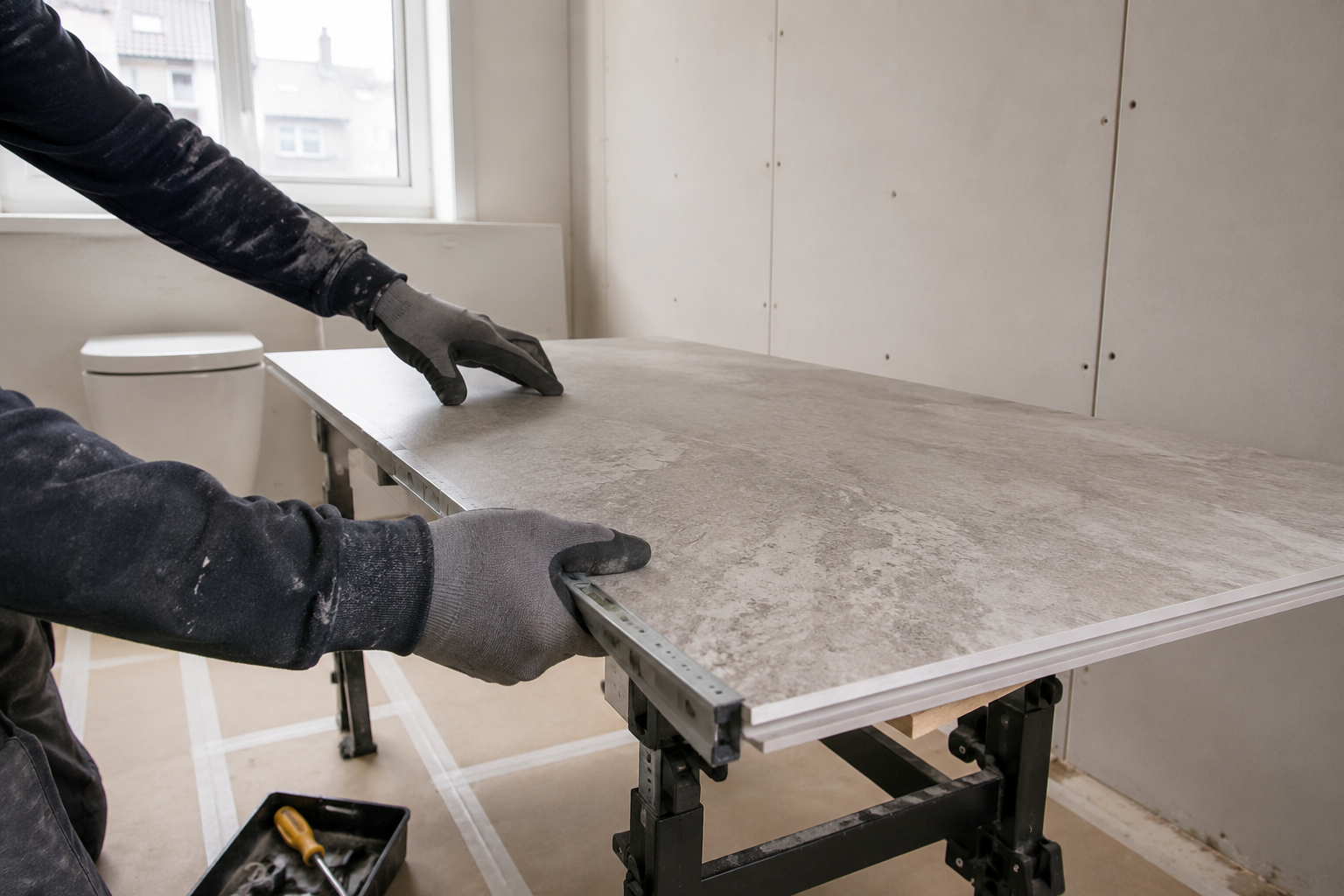
Once a finish is shortlisted, check the actual product information. It must be suitable for the intended shower or bathroom position and available in sizes that work with the walls and access route. Ask how thickness affects screens, taps and existing surfaces. In a flat, large boards need to pass the stair and doorways. A sample that fits in your hand gives no sense of that handling requirement. The installer should connect the decorative choice to a practical cutting and fitting plan before the order is confirmed.
Compare Complete Quotes for the Finalists
If two products are still on your shortlist, request prices using the same wall coverage and associated work. Include preparation, trims, adhesive, fitting and disposal rather than comparing only the sample or board price. Different sizes and joint methods may alter quantities and labour. Ask what explains any price difference so you can decide whether the appearance or construction is worth it to you. Keep the comparison focused on named products. Broad labels such as premium marble or luxury stone do not tell you whether the quotes contain the same materials or installation standard.
Keep a Record of the Approved Choice
Write down the manufacturer, range, colour, finish and board size, and check those details against the final quote. Keep the physical sample until the materials arrive so obvious differences can be raised before fitting. Save the care instructions and product references for future repairs. If you change your mind, ask about the effect on the order, price and programme before confirming a substitute. A good sample review ends with a clear, recorded choice that the homeowner, supplier and fitter all understand, rather than a remembered colour description that could refer to several different boards.