Check What the Product Is Designed For
A panel sold for decoration is not automatically suitable inside a shower. Confirm that the exact range is intended for the wet area where it will be fitted. Product names, printed patterns and a waterproof headline are not enough to describe the full installation. Ask for the manufacturer’s instructions and the components used with the board. Some panels have different core materials or limitations even when their faces look similar. The first question is whether the product suits the intended position, followed by how the complete wall system must be assembled to perform there.
Distinguish the Face from the Whole Installation
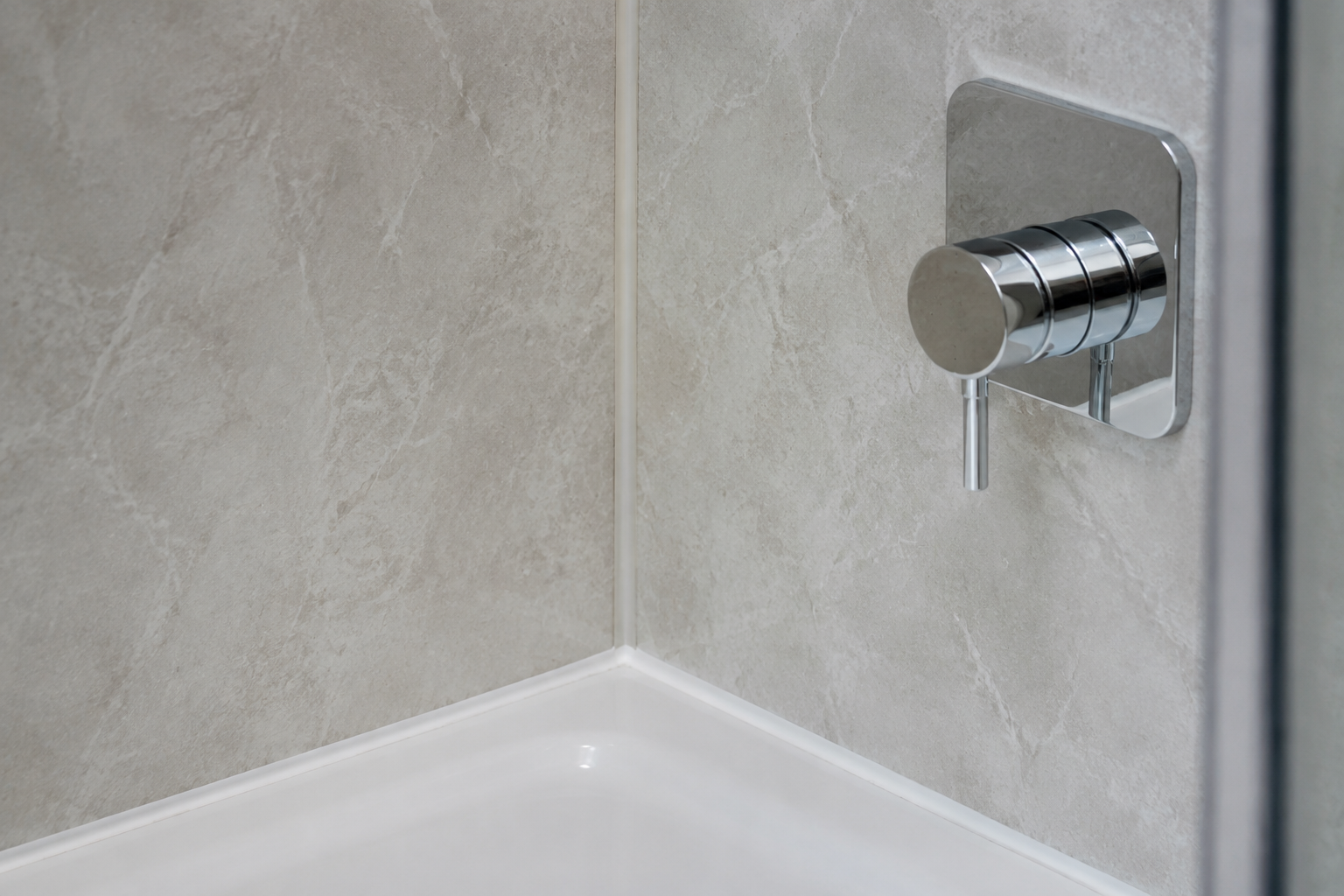
The decorative face may resist water while cut edges, joints or openings still need particular protection. Boards meet at corners and finish beside trays, baths and other surfaces. Water can reach vulnerable areas if those connections are not made correctly. That is why a waterproof panel is not the same as a waterproof bathroom. Ask the installer to explain the complete system in your room. The useful answer identifies the board, joints, trims, adhesive and seals, rather than suggesting that the face alone makes preparation and finishing details unnecessary.
Follow the Instructions for Board Joints
Panel ranges join in different ways. A shaped edge, separate trim or other connection may require a specific sealing method. The installer should use the correct components and follow the product guidance rather than applying a method remembered from a different brand. Ask how visible joins will be positioned and protected in the shower. A connection that looks closed from the front may still depend on work inside the joint. Keep the instructions with your installation documents so any future repair can be matched to the actual system rather than guessed from its appearance.
Pay Attention to the Bath or Tray Connection
The lower panel edge is frequently exposed to water. Its connection to the bath or tray must follow the chosen system and work with a securely supported fitting. Movement can affect a seal, so repeated cracking should prompt investigation. Ask how the old edge is prepared if the bath is staying and whether the screen needs removal for access. A neat visible bead may be only one part of the detail. The fitter should explain what is required behind or within that connection and how long new materials need before the shower can be used.
Protect Openings Around Pipes and Fixings
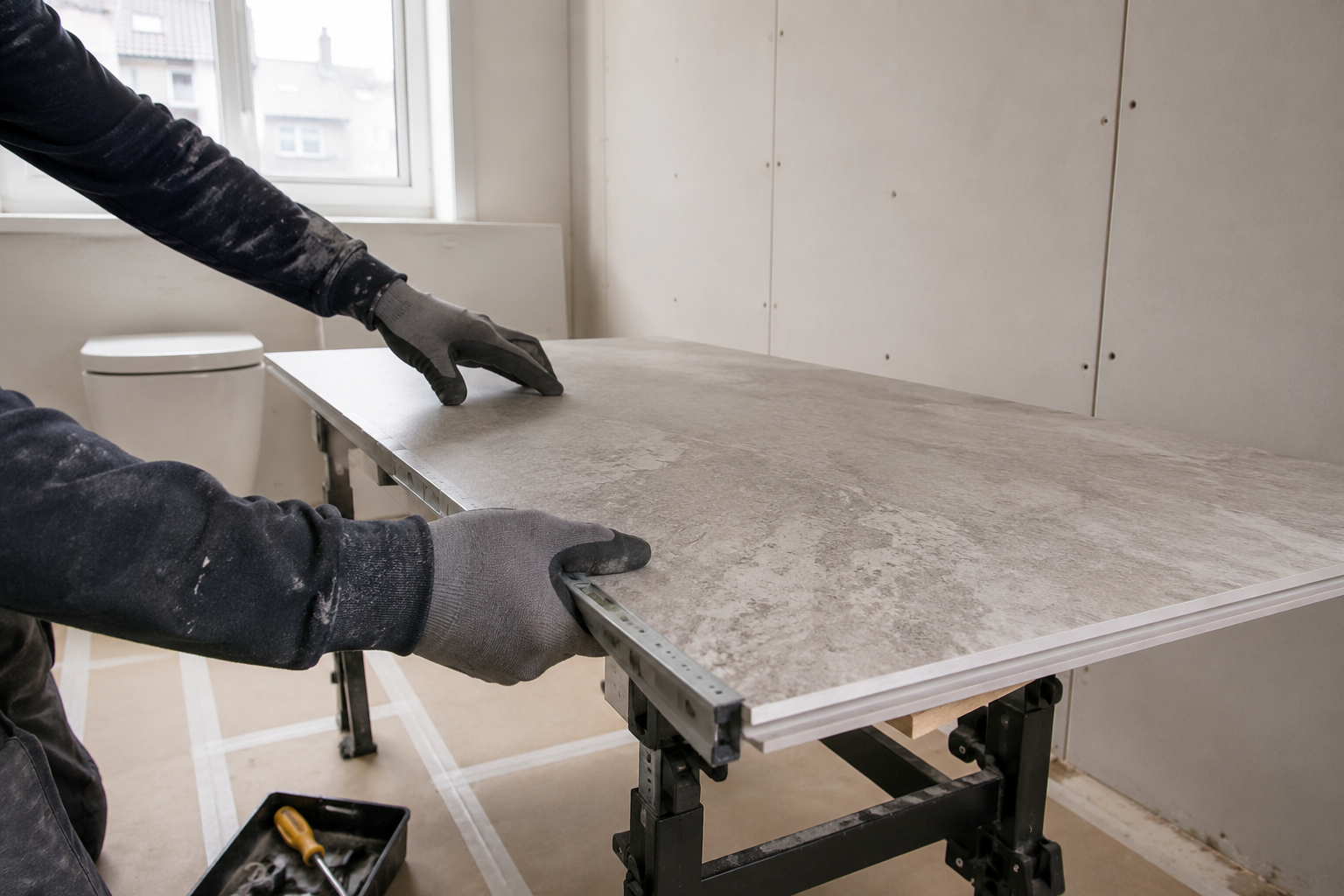
Every tap, shower control, rail or screen fixing can create an opening through the panel. Those openings need the treatment required by the manufacturer, and the fittings need a firm fixing in the wall behind the decorative surface. Plan their positions before cutting to avoid unnecessary holes. Do not assume a cover plate hides or seals everything automatically. If an accessory is added later, use an appropriate fitting method for the existing system. Keeping the panel details and support locations is helpful because a future installer may not otherwise know how the wall was constructed or what lies behind it.
Start with a Sound Wall
Panels should not be used to hide an active leak, damp, damaged material or loose surfaces. The wall preparation must suit the product and fixing method. An existing tiled surface may be acceptable for some systems under specified conditions, but it needs checking. Tell the fitter about previous leaks and repeated marks before new boards cover the area. A waterproof face cannot repair a pipe or stabilise loose or damaged plaster. The quote should explain the visible preparation and how additional repairs will be agreed if removal exposes a problem that was not accessible during the initial visit.
A Wet-Room Floor Needs Its Own System
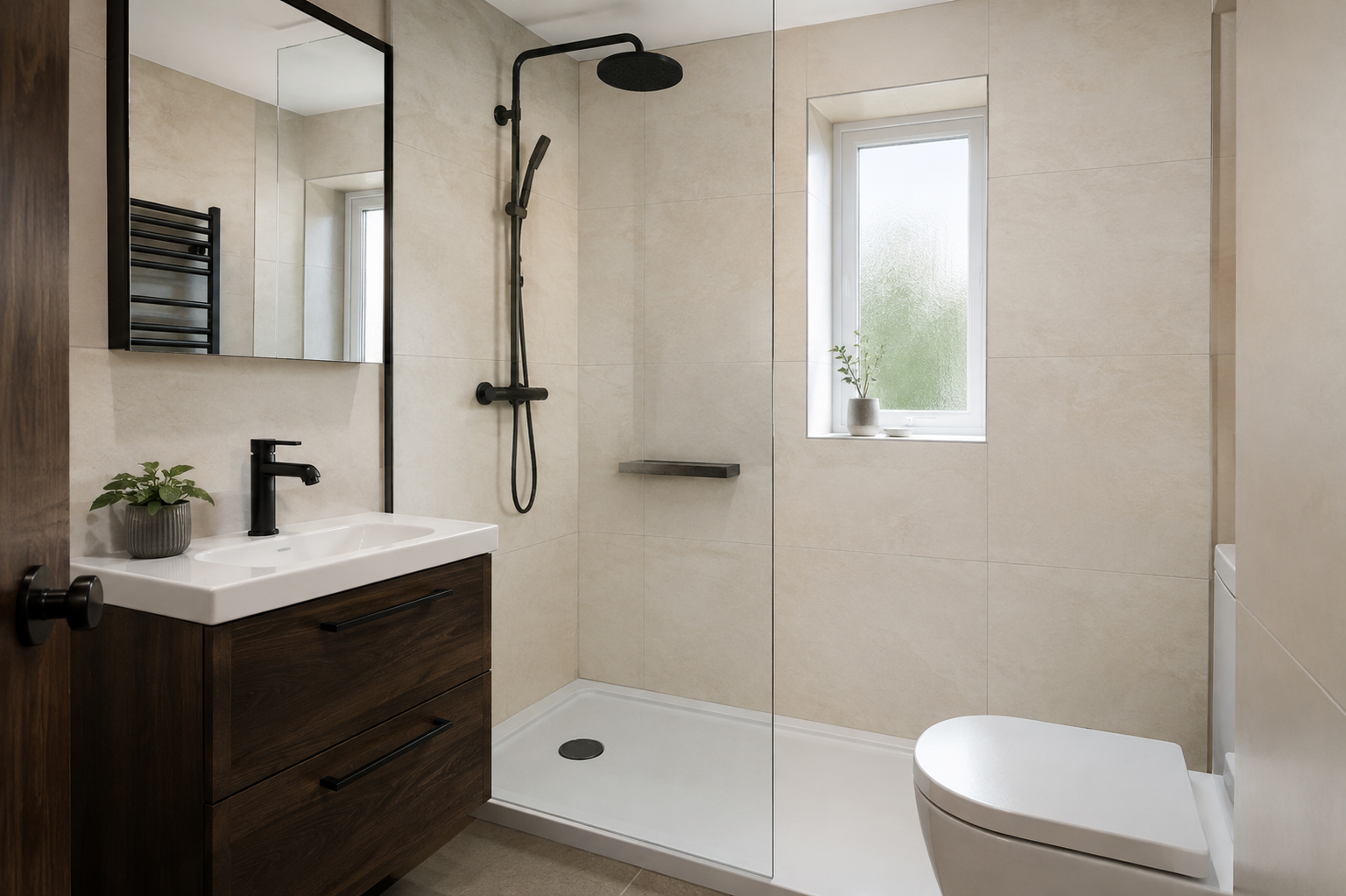
Wall panels do not provide all the construction needed for a level-access wet room. The floor, drainage, junctions and other surfaces need a suitable coordinated waterproofing arrangement. Ask which systems are proposed and who is responsible for ensuring they work together. Do not infer that a shower can spray anywhere in the room simply because the walls are panelled. The screen and layout still need to contain water appropriately. A competent fitter should explain the difference between a panelled shower with a tray and a wet-room construction so you understand the job being quoted.
Maintenance Still Matters After Fitting
Use the approved cleaning guidance and check visible joints during routine care. Gaps, lifting seals, swelling or water appearing outside the shower should be reported rather than ignored because the product was described as waterproof. The cause may involve movement, damage or a leak elsewhere. Avoid covering the symptom with extra sealant without an assessment. Keep the product and installer details so the right system can be checked. Waterproofing is not a reason to stop looking after the bathroom; it is a performance expected from suitable materials correctly fitted and maintained in their intended position.
Ask for a Clear Installation Record
The quote and handover information should name the panel range, fitting components and relevant care instructions. Ask about any guarantee terms and distinguish product coverage from the installer’s work. Confirm the waiting period before the shower can get wet. You do not need to become a technical expert to make a sensible choice. You need a clear explanation of what is being fitted, how the connections are protected and what to do if something changes. That is more useful than a broad promise that panels can never leak regardless of preparation, installation or future damage.