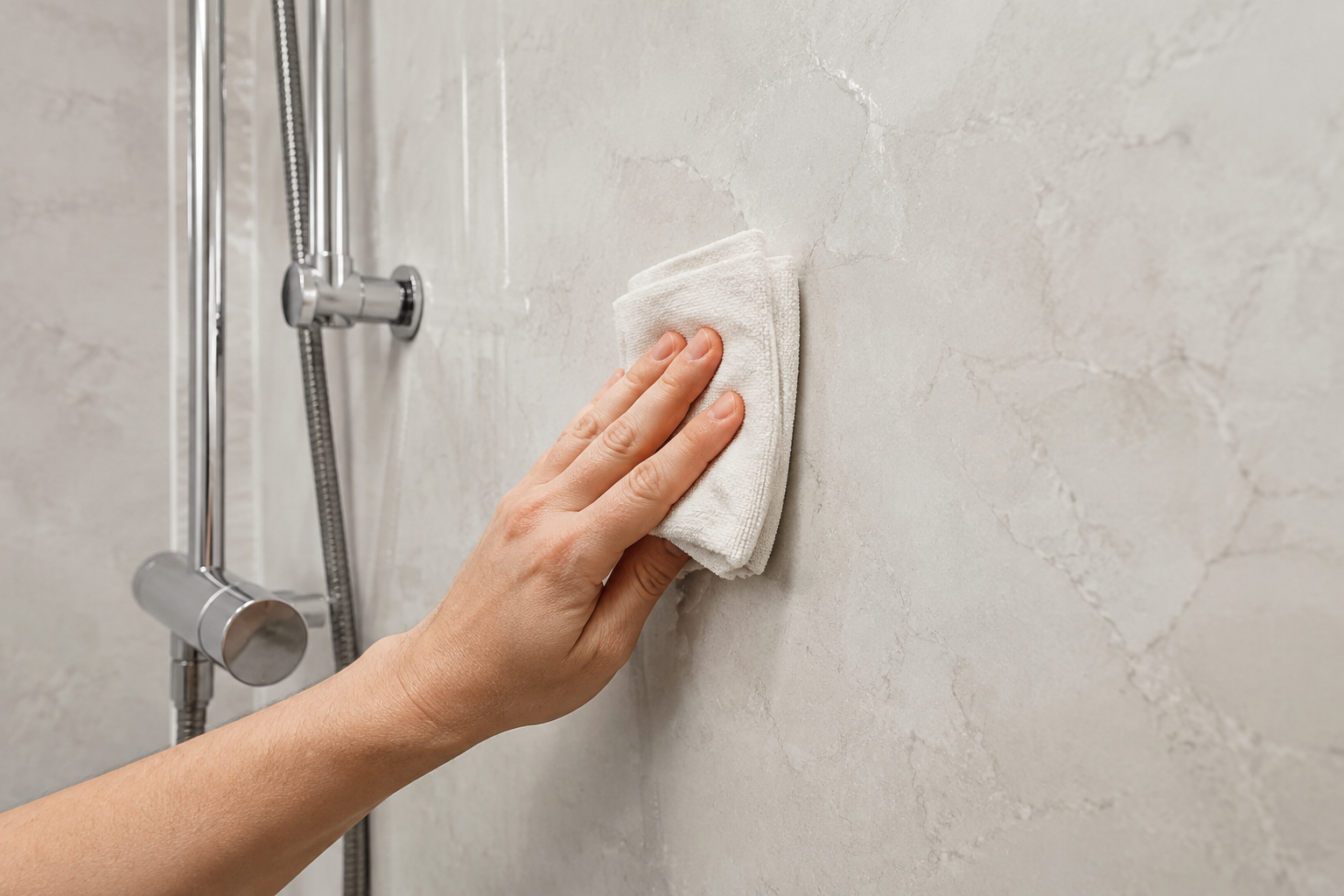
Fewer Grout Lines Around the Shower
A large wall panel covers an area that would otherwise be made up of several tiles. That reduces the number of small grout joints across the wall and can make routine cleaning less fiddly. It does not remove every joint: corners, board connections and the edges beside a bath or tray still need proper seals. If cleaning old grout is the main reason you want a change, compare how those remaining edges will be finished. The benefit is a simpler surface to look after, with maintenance focused on fewer visible joins.
A Surface That Is Straightforward to Wipe
Many bathroom panel faces can be cleaned with a soft cloth and an appropriate mild cleaner. Always use the care instructions for the chosen product because finishes differ. A smooth board can be easier to wipe than a wall with many recessed tile joints. Soap residue and water marks still build up, particularly near the shower controls and screen. Plan enough access to reach those areas comfortably. A panel that is easy to clean in principle is less useful if a deep cupboard or awkward screen stops you reaching the corner.
Different Looks Without Changing the Layout
Marble, stone, tile, wood and plain-colour effects can change the appearance of a room while the bath and toilet remain in their existing positions. That can be useful when the current layout works but the walls look tired. Compare samples with the floor and furniture you plan to keep. A printed stone effect is not the same material as natural stone, so assess the actual panel rather than assuming it has the same feel or care requirements. Choose a finish you like across the whole wall, not only in a small sample.
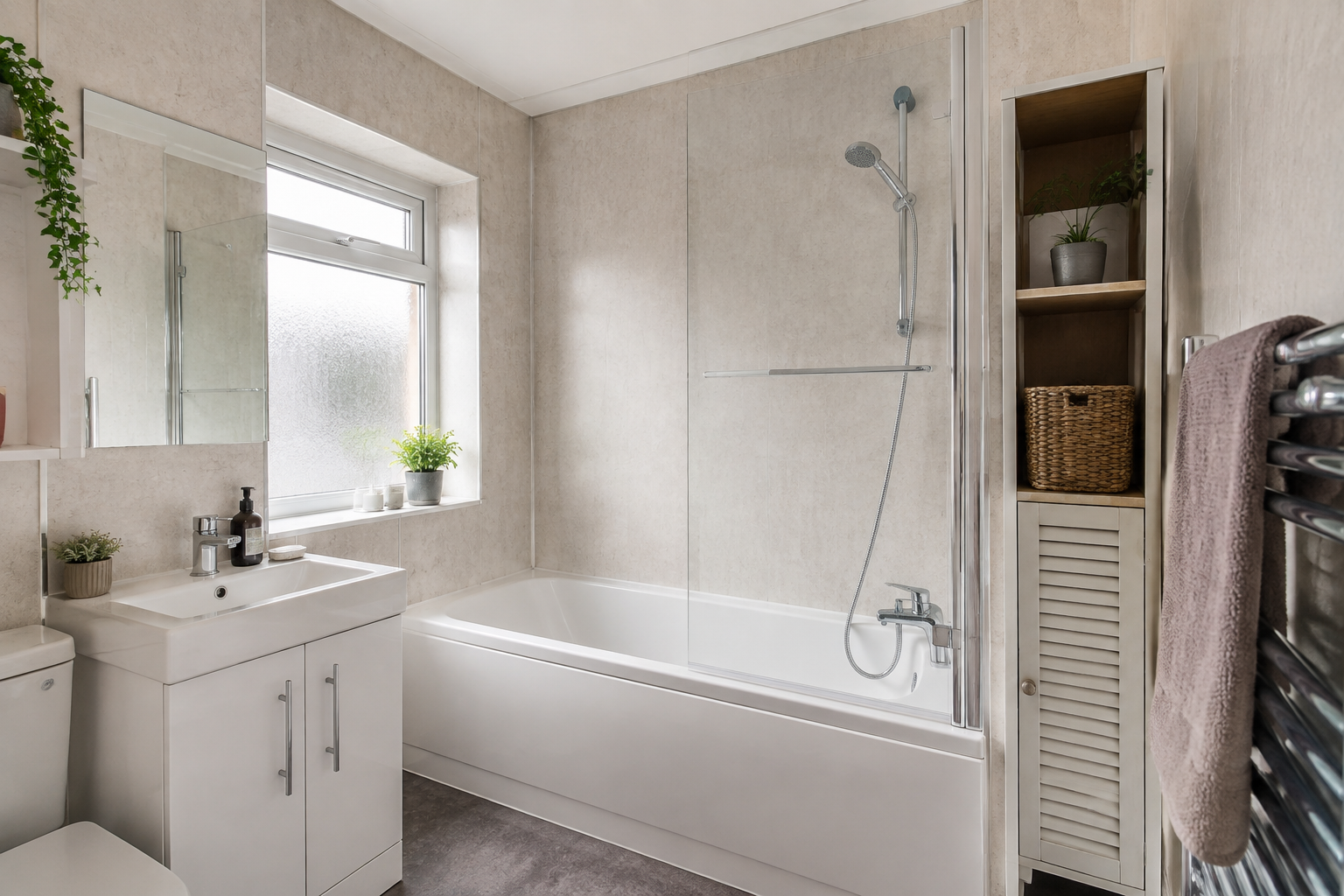
Options for Smaller Bathrooms
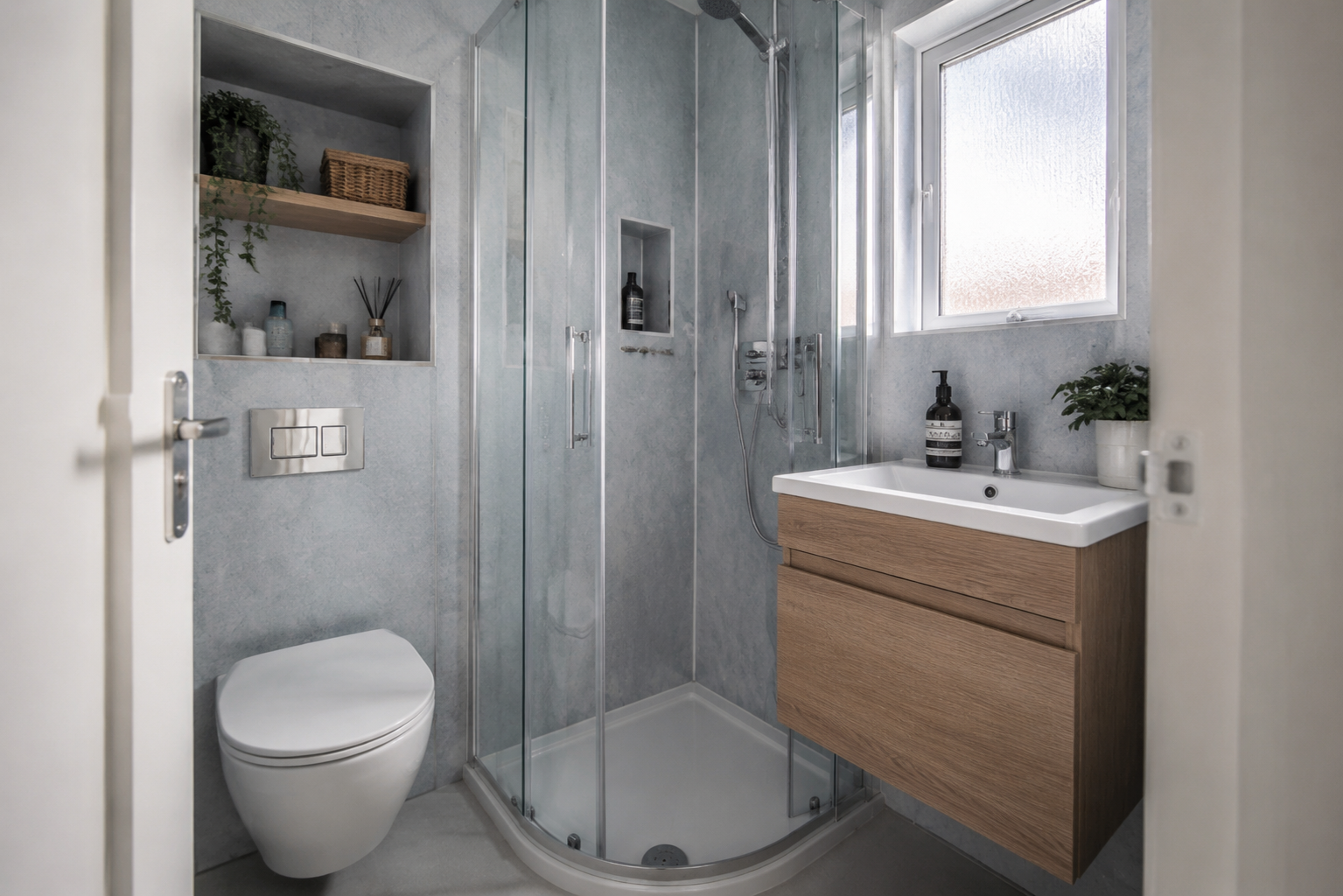
A compact shower room does not need an oversized bath or dramatic feature wall to look welcoming. A simpler panel pattern, useful vanity storage and a mirror with good lighting can work well together. Panels are available in different sizes, and the layout should be planned to avoid very narrow strips around the fittings. Think about where bottles and towels will go while choosing the wall finish. The practical benefit comes from combining the panels with a room you can move around and keep tidy, rather than relying on colour alone to make it feel bigger.
Covering Only the Areas You Need
You can choose panels for the shower or bath area without necessarily covering every bathroom wall. This may suit a room with sound painted walls elsewhere. Full-room panels are another option where you want a consistent finish around the basin and toilet too. Neither approach is automatically better. Compare the condition of the existing surfaces, splash exposure and how the panel edges will meet the rest of the room. A smaller amount of well-planned coverage can solve the actual problem without adding work that offers little benefit to your household.
Keeping a Traditional Bathroom Practical
Wall panels are not limited to black-framed showers and modern furniture. Quieter marble or stone effects can sit beside a fitted bath, white basin and traditional taps. In an older Edinburgh room, the stopping points around windows, timber surrounds and ceiling mouldings need thought. Keeping useful original details can be compatible with an easier-clean shower area. Compare the whole combination before choosing, including the trim colour. A panel selected only because it is described as traditional may still look wrong beside the floor or fittings you want to retain.
What Panels Do Not Fix by Themselves
A new wall finish does not repair a leak, strengthen loose plaster or remove moisture from the air. Those issues need attention before the boards are fitted. A waterproof face also relies on correctly made joints and sealed openings to protect the wall behind it. Ask about preparation, ventilation and the fitting system rather than treating the panel as a cover for every defect. This matters especially if the current wall has repeated staining or movement. Dealing with the cause is part of obtaining the everyday benefits you expect from the new finish.
Fitting and Future Repairs
Large boards can reduce the number of individual pieces being fitted, but installation time depends on the room and preparation. Avoid assuming every panel bathroom will be quicker or cheaper than every tiled one. Ask how a damaged board could be accessed later and keep the product name and colour reference. A matching replacement may be difficult if a range changes. Sensible planning around screens, cupboards and service access can make future work clearer. The benefit of fewer joints should be considered alongside the practicalities of fitting and looking after the chosen system.
Deciding Whether Panels Suit Your Home
Write down the problem you want to solve: stained grout, difficult cleaning, tired walls or a bathroom layout that no longer works. Then compare panels against that need using real samples and a written fitting plan. Ask which surfaces will be prepared, which fittings will stay and what the quote includes. A home visit can help establish whether shower-only panels or a full refit makes more sense. The most useful result is a bathroom that is comfortable to use and straightforward to maintain, with the appearance and amount of work you have deliberately chosen.