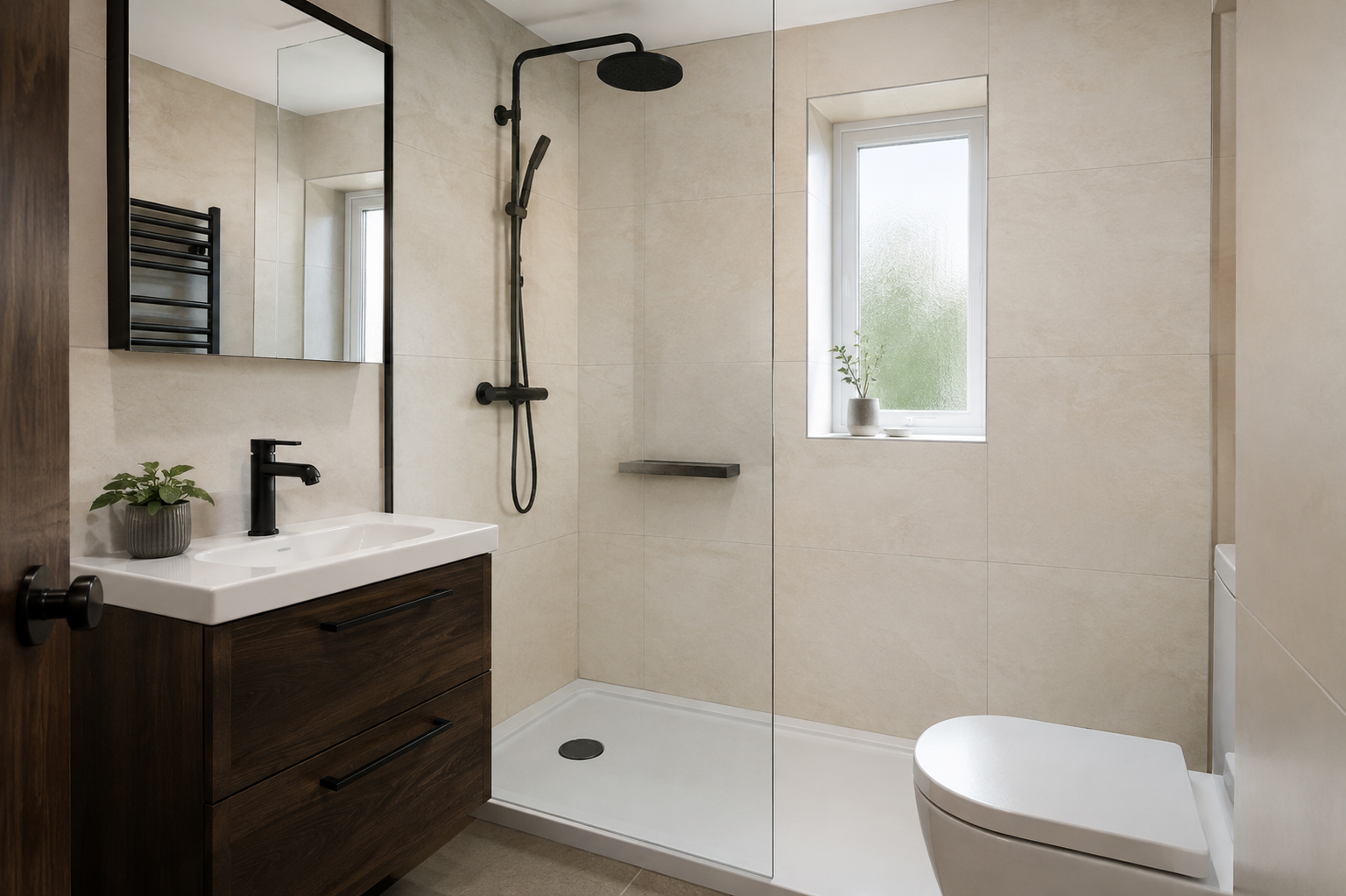
Compare Two Complete Wall Systems
Panels and tiles can both provide suitable bathroom wall finishes when the products and installation are appropriate. The useful comparison includes the preparation, waterproofing details, joints and finishing work, not just the visible surface. A tile is one piece in a tiled system; a panel board is one piece in a panel system. Ask the fitter to explain what each option needs in your room. Avoid a blanket claim that one is always cheaper, quicker or better. The condition of the walls and the design you choose can change those answers considerably.
The Difference in Visible Joints
Tiles create a pattern of individual pieces and grout joints, while large panels usually have fewer board connections. That can make panels attractive if cleaning grout is a particular frustration. Panels still need correctly made corners, openings and edges beside the bath or tray. Tiles offer different shapes and laying patterns that may be part of the appearance you want. Think about both the look and the care involved. Fewer joints can be useful, but it does not mean the remaining seals can be ignored or that every panel installation is entirely seamless.
Appearance and Choice of Pattern
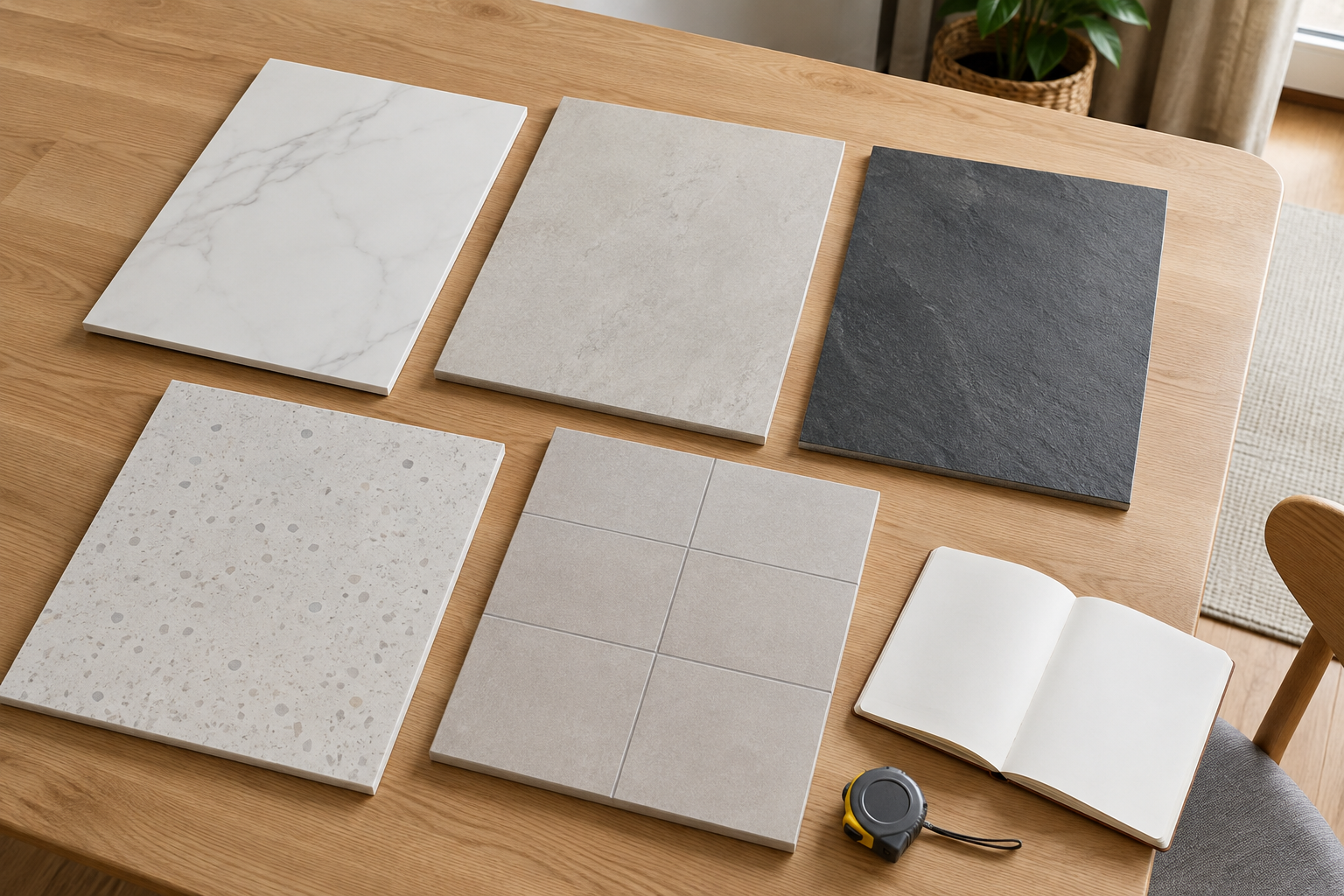
Tiles offer individual sizes, textures and arrangements, while panels can carry large stone, marble or other printed designs across broad areas. Tile-effect panels imitate a grid without separate grout between every apparent tile. Compare real samples because photographs can hide differences in shine and texture. A full-board image is important for large panel patterns; a group of tiles helps show the intended layout. Include the floor and vanity in the comparison. The right appearance is the one that works with your actual room and fittings, rather than whichever material has the more impressive marketing description.
Preparation of the Existing Walls
Neither option should be used to conceal an active leak or damaged surface. The wall must suit the chosen fixing and waterproofing method. Some panel systems permit fitting over sound tiles under specified conditions, but that is not universal. Tile removal or wall repairs can change the amount of work for either choice. Ask what preparation is included and what may only become clear after stripping out. A materials-only price says little about this part of the job. The fitting plan should explain how the wall becomes ready before the new finish is applied.
Installation Time in Your Bathroom
Large panels may reduce the number of pieces being fitted, while tile layouts can involve many cuts and joints. That does not establish a fixed installation time for every bathroom. Windows, corners, awkward access, repairs and other trades all affect the programme. Adhesives, grout and sealants can also have waiting times. Ask for a sequence based on your room and chosen products rather than a universal promise. If it is the only bathroom, discuss which facilities are unavailable at each stage. A clear programme is more useful than a speed comparison that leaves out preparation and drying.
Cleaning the Finished Surface
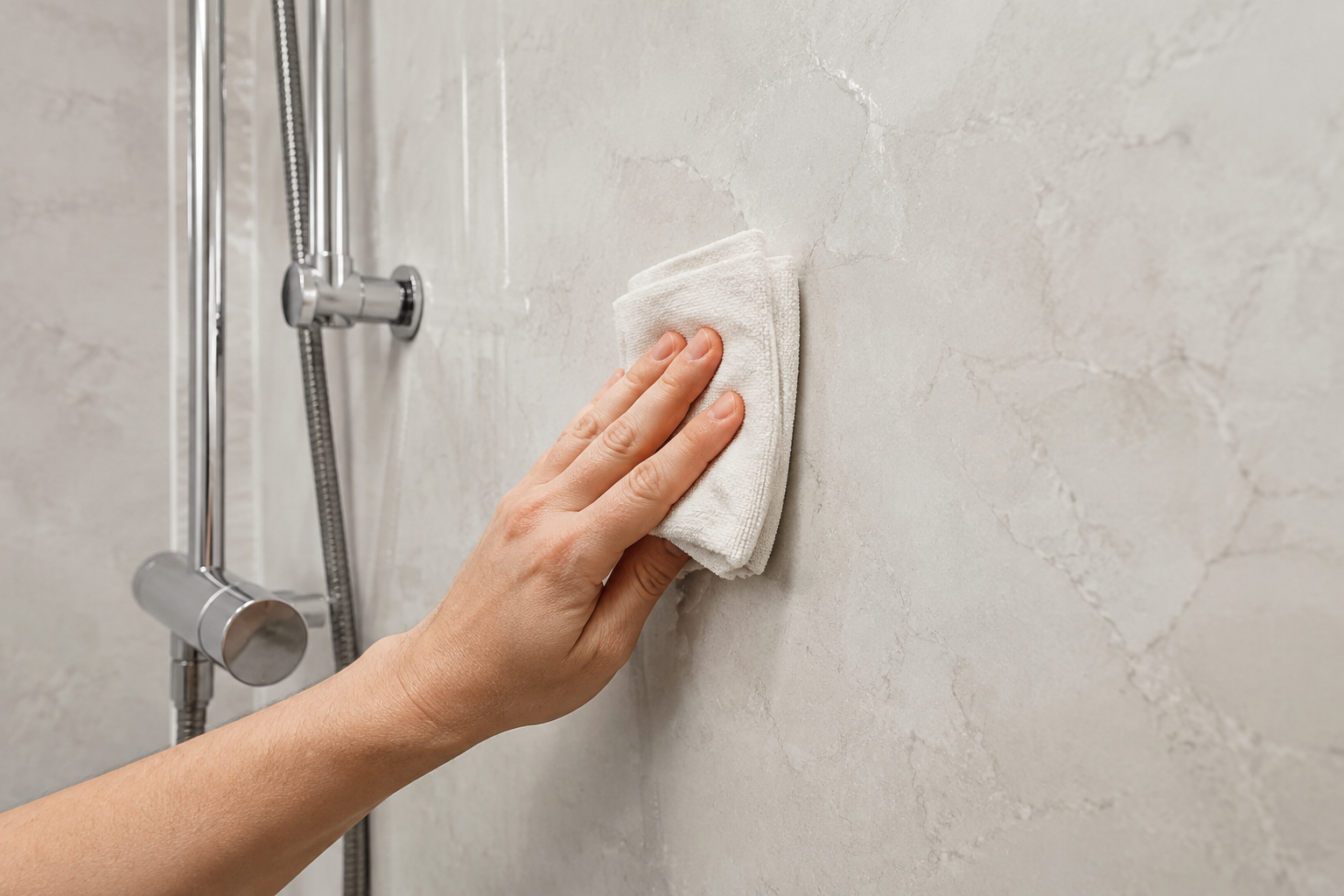
Panels can reduce grout cleaning, while tiles have a different surface and joint maintenance routine. Follow the instructions for the exact products in either case. Some tile materials and panel finishes have restrictions on cleaners that may be safe for other surfaces. Soap and water marks still collect around screens, taps and lower edges. Check whether the layout gives you access to clean those areas. Ease of maintenance depends partly on the material and partly on the room design. A smooth panel hidden behind an awkward screen can still be frustrating to reach.
Repairing Damage Later
A damaged tile may be replaceable individually if a match is available and the surrounding system can be protected. A damaged panel may require removing a larger board and possibly adjoining trims or fittings. The practical method depends on the installation. Keep spare material where useful and retain product references for either choice. Colours and ranges can change, so neither option guarantees an invisible future repair. Ask how screens, cupboards and service access affect removal. Understanding likely repair access before fitting is more useful than assuming small pieces are always easy or large boards are always impossible to replace.
Compare Installed Prices Like for Like
Request prices for the same walls, heights and associated work. Include removal, preparation, waterproofing details, trims, fitting and waste disposal. Check whether decorating or refitting accessories is included. A low tile price per square metre and a low panel price per board are not directly comparable without quantities and labour. Ask for the actual product ranges so differences are clear. If one option leaves more room in your budget, consider whether that helps fund storage, ventilation or another practical improvement. The cheapest material is not automatically the least expensive complete bathroom job.
Choose Around Your Priorities
Decide which matters most to you: a particular tile layout, fewer grout lines, a broad marble pattern, repair access or the total fitting price. Compare specific products and quotes rather than arguing about two broad categories. Ask any remaining questions about wall condition, maintenance and timing before agreeing the work. Panels and tiles each offer useful choices for ordinary bathrooms. A clear decision comes from understanding how the selected system will be fitted and cared for in your room, with the appearance and level of work that suit your household.