What the Two Names Mean
PVC panels are plastic boards, sometimes made with a hollow internal structure. Laminate panels have a decorative laminate face over a core, which varies between products. Those broad names do not tell you the quality, suitable use or complete fitting method of every board. Ask to see the exact range being proposed rather than comparing two generic material labels. The sample, technical information and installation instructions should describe the product you will actually receive. A decision based only on the word premium or budget leaves important differences unexplained.
How the Boards Feel in Use
A lightweight PVC board may feel different when tapped or handled from a heavier laminate-faced board. That does not by itself decide whether it is suitable for your shower. Support, fixing method and the wall behind it affect the finished result. Handle samples of both products if possible and look at the exposed edge to understand their construction. Ask how accessories are fixed securely to the wall behind the panel. Neither type should be assumed to carry the weight of a shower screen or support rail without the correct fixing arrangement.
Comparing the Surface Design
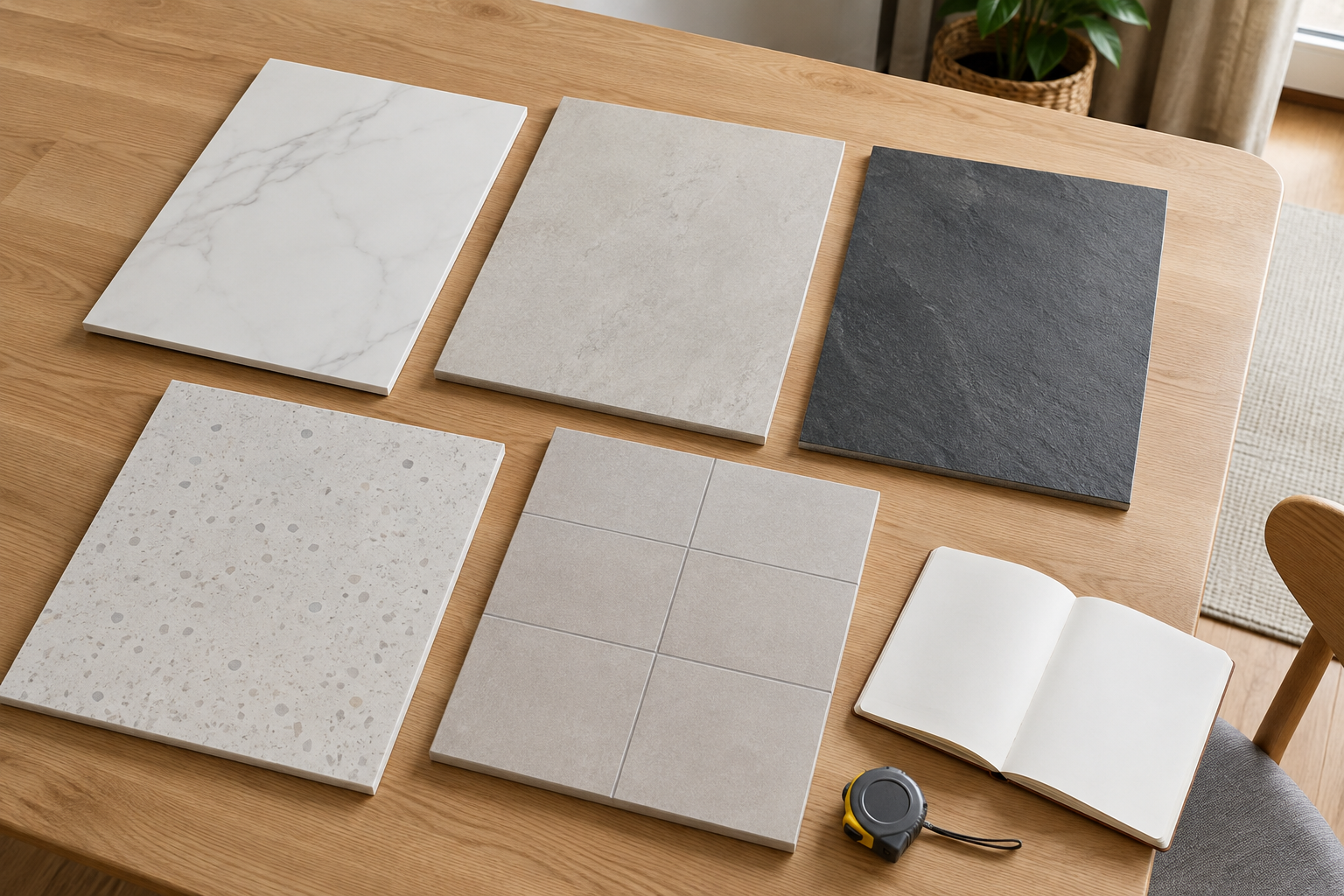
Both materials can offer marble, stone and plain finishes, but the printing, texture and shine may differ. A small colour sample is useful for matching the floor; it may not show a large vein pattern or the full repeat. Request a full-board view and compare the surface under your bathroom lights. Check whether the design continues convincingly across the planned joints. One range may offer the appearance you prefer even if another has a similar colour name. Judge the finished wall you want, not just the product category on the label.
Joints and Corner Details
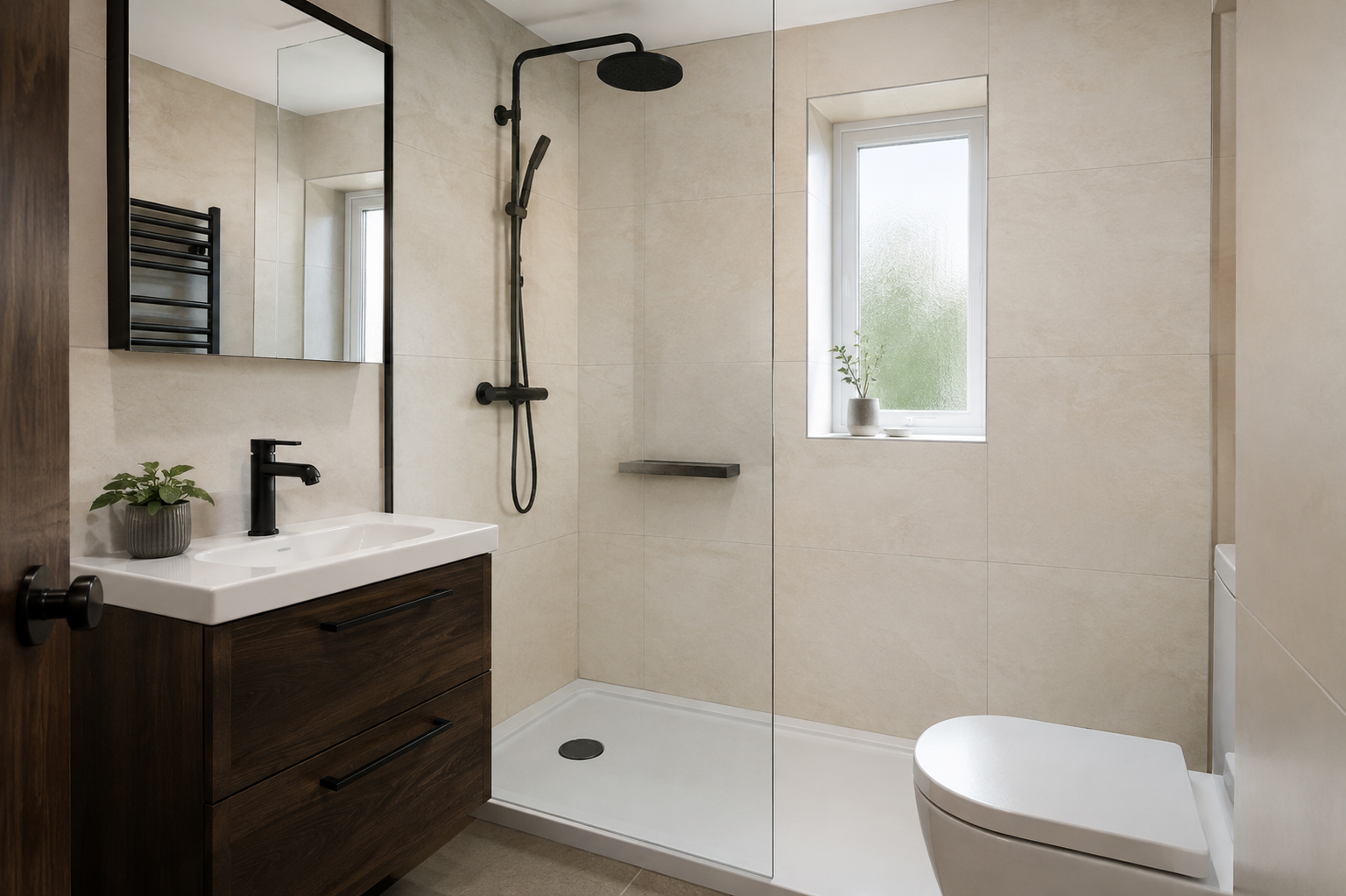
Different ranges use different ways of joining boards. Some require visible connecting trims; others have a shaped edge that fits into the next panel. Corners, window recesses and exposed ends still need suitable finishing details. Ask to see those pieces with the sample, including the available colours. A trim that looks small on a supplier page can become noticeable along every corner of a compact shower. Check that the installer has allowed for the correct components rather than mixing unrelated parts simply because they look similar or appear to fit.
Waterproofing the Complete Installation
A board suitable for shower walls must still be installed as a complete system. Cut edges, pipe openings and the bottom edge beside the tray are places where the instructions matter. Laminate cores can differ in their response to moisture, and PVC systems also depend on properly made connections. Do not treat waterproof as permission to leave joints unsealed or ignore a loose tray. Ask the fitter which adhesive and sealant the manufacturer specifies and how the openings around the shower controls will be finished. The exact product guidance takes priority over general comparisons.
Board Size and Access in a Flat
Check the available widths and lengths before settling on a panel range. A board that creates fewer joints may also be harder to carry around a tight stair turn. In an Edinburgh flat, the delivery route should be measured alongside the bathroom itself. Cutting a board to get it upstairs can alter the planned appearance or introduce an extra joint. Discuss that possibility before ordering. Compare products using sizes that can actually reach and fit the room, rather than assuming the largest board in either range will always give the simplest result.
Cleaning and Everyday Care
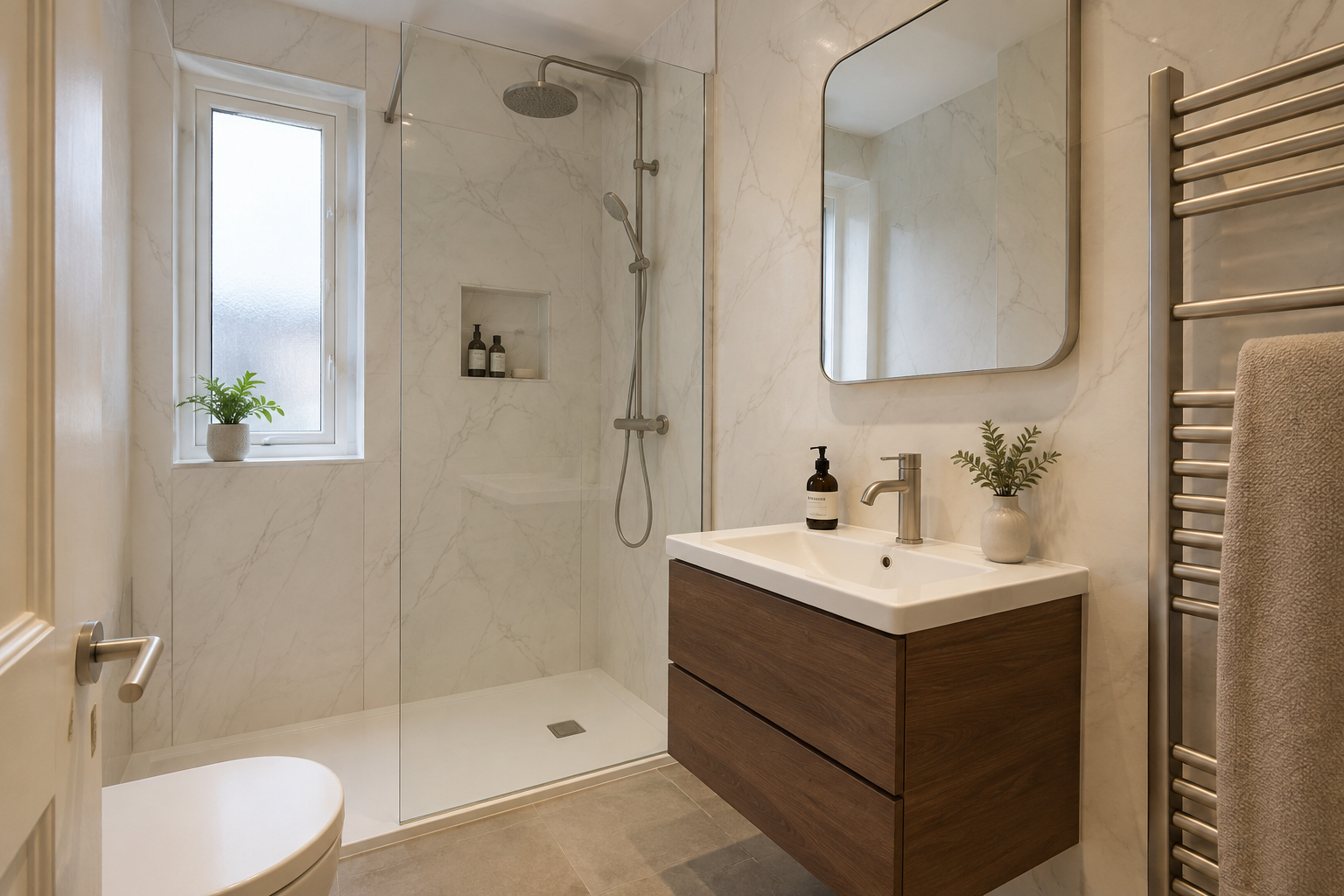
Read the care guidance for both shortlisted products. A soft cloth and an approved cleaner are common requirements, but surface finishes and restrictions vary. Check advice on abrasive products, solvents and cleaning the seals. If someone in the household uses hair dye or other staining products, ask the supplier about the exact finish rather than guessing. Keep the care sheet after fitting. Easy cleaning is a useful benefit, but neither material means you can ignore soap deposits, damaged sealant or signs of water escaping from the shower.
Comparing the Installed Price
The board price should be compared with trims, adhesive, preparation, removal and fitting included. A less expensive sheet does not necessarily produce the lowest complete quote if it needs more joints or different preparation in your room. Equally, a heavier board does not automatically justify a higher price without a useful difference for you. Ask for the named products and the same coverage in both options. That lets you decide whether the appearance, size or construction of one range is worth the difference in the actual bathroom job.
Choosing Between the Two
Start with the room, the finish you want and the amount you intend to spend. Compare two specific samples, their instructions and complete quotes. Ask what would happen if a board were damaged later and whether matching pieces can be ordered separately. Keep a record of the range and colour once chosen. The sensible choice may be different for a small shower refresh and a full bathroom refit. A clear explanation of each product’s strengths and limitations is more helpful than a claim that all PVC or all laminate panels are always best.