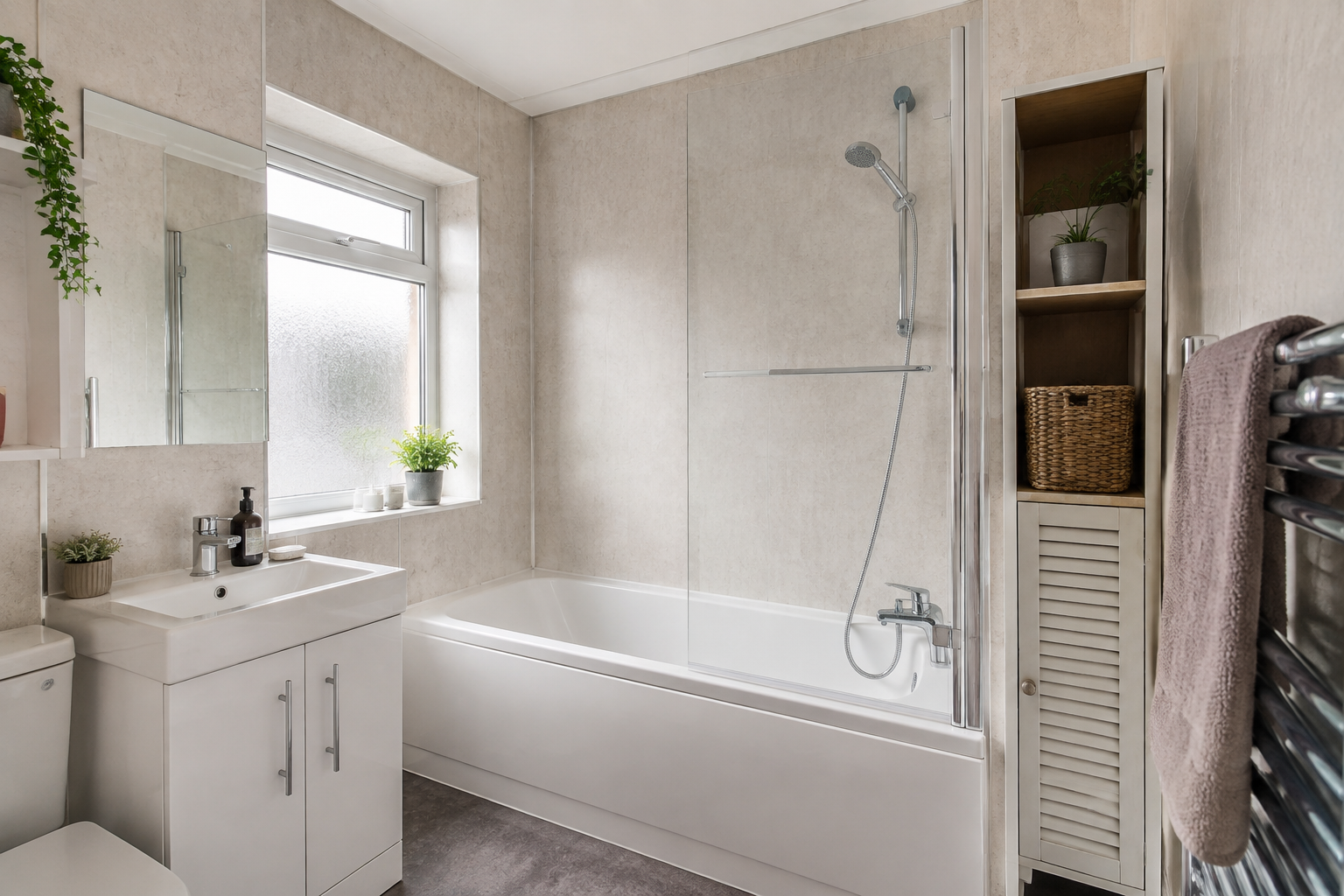
Start with the Problem You Want to Solve
If the shower walls are difficult to clean but the rest of the room is sound, replacing only that area may be enough. If several walls have tired tiles or mismatched repairs, full-room panelling may give a more consistent result. Write down what you dislike about the current bathroom before choosing the amount of coverage. That separates a practical need from the appeal of a showroom photograph. You can then discuss each wall during the measuring visit and avoid paying to replace surfaces that are still doing their job.
What Shower-Only Panelling Includes
Shower-only fitting normally concentrates on the walls that receive direct spray. Around a bath with an overhead shower, the coverage needs to suit the actual screen and shower arrangement. Agree the height, width and end points rather than relying on the phrase shower area. The edges where panels meet painted walls or existing tiles need appropriate trims or other approved details. Ask whether the screen has to come off and whether it will be refitted or replaced. Those decisions affect both the appearance and the amount of installation work.
What Full-Room Panelling Changes
Covering the whole bathroom takes the finish around the basin, toilet, door and other walls beyond the shower. It can reduce the amount of painted surface that needs decorating, but it creates more corners and openings to finish. Consider how panels will meet the ceiling, floor and window recesses. A continuous design can work well in a small room, provided the pattern is not too busy. Full-room coverage is a design and maintenance choice; it is not a way to avoid checking the condition of every surface being covered.
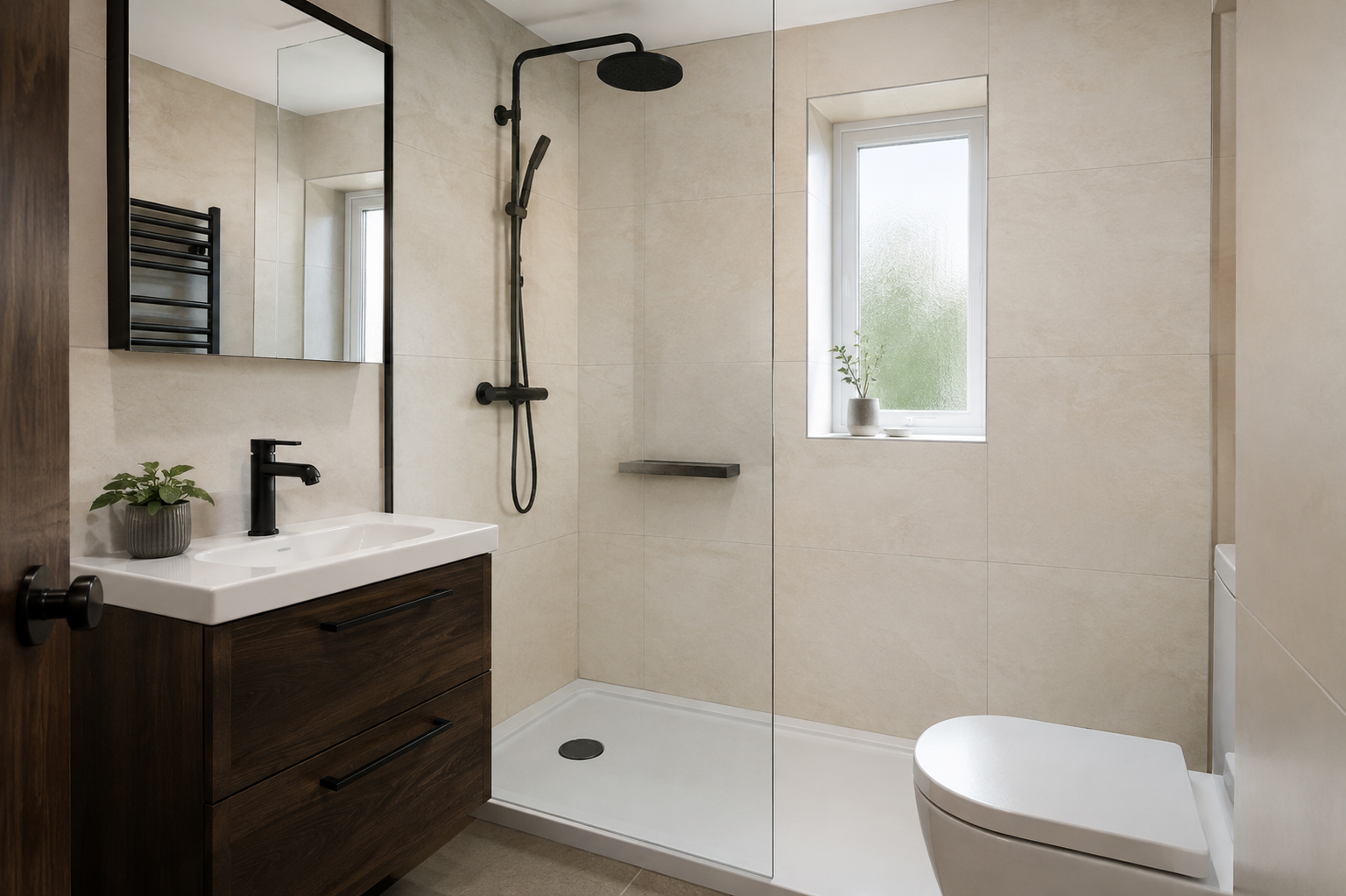
Check the Existing Walls Separately
One sound wall does not prove that all the others are ready for panels. Look for loose tiles, cracks, staining and previous repairs, and point them out during the visit. Walls beside a leaking shower may need different preparation from a dry wall behind the door. If panels are to go over an existing finish, the chosen product must allow that method and the surface must be suitable. Ask the installer to explain any difference in preparation between walls. This makes the quote easier to understand and helps identify where the main work lies.
Plan the Join with Painted Walls
A mixed finish needs a deliberate stopping point. The edge of a shower enclosure, a corner or a change in wall position may provide a tidy place to finish the panels. A short strip of paint trapped behind a screen can be difficult to reach later. Check whether the painted area is likely to receive regular spray and choose finishes suited to their positions. Painting and panel fitting should be coordinated so neither trade leaves an awkward unfinished edge. The room still needs ventilation whichever combination of surfaces you choose.
Look at the Pattern Across the Room
A marble or terrazzo design that looks attractive on one shower wall may feel much stronger when repeated on every wall. Use a full-board image and compare the panel with the floor and vanity. If you want full-room coverage, a less busy pattern or plain colour may be easier to combine with existing fittings. A darker shower feature can work with lighter walls elsewhere. There is no single correct choice, but the amount of pattern should be judged across the whole room rather than from a small sample held in your hand.
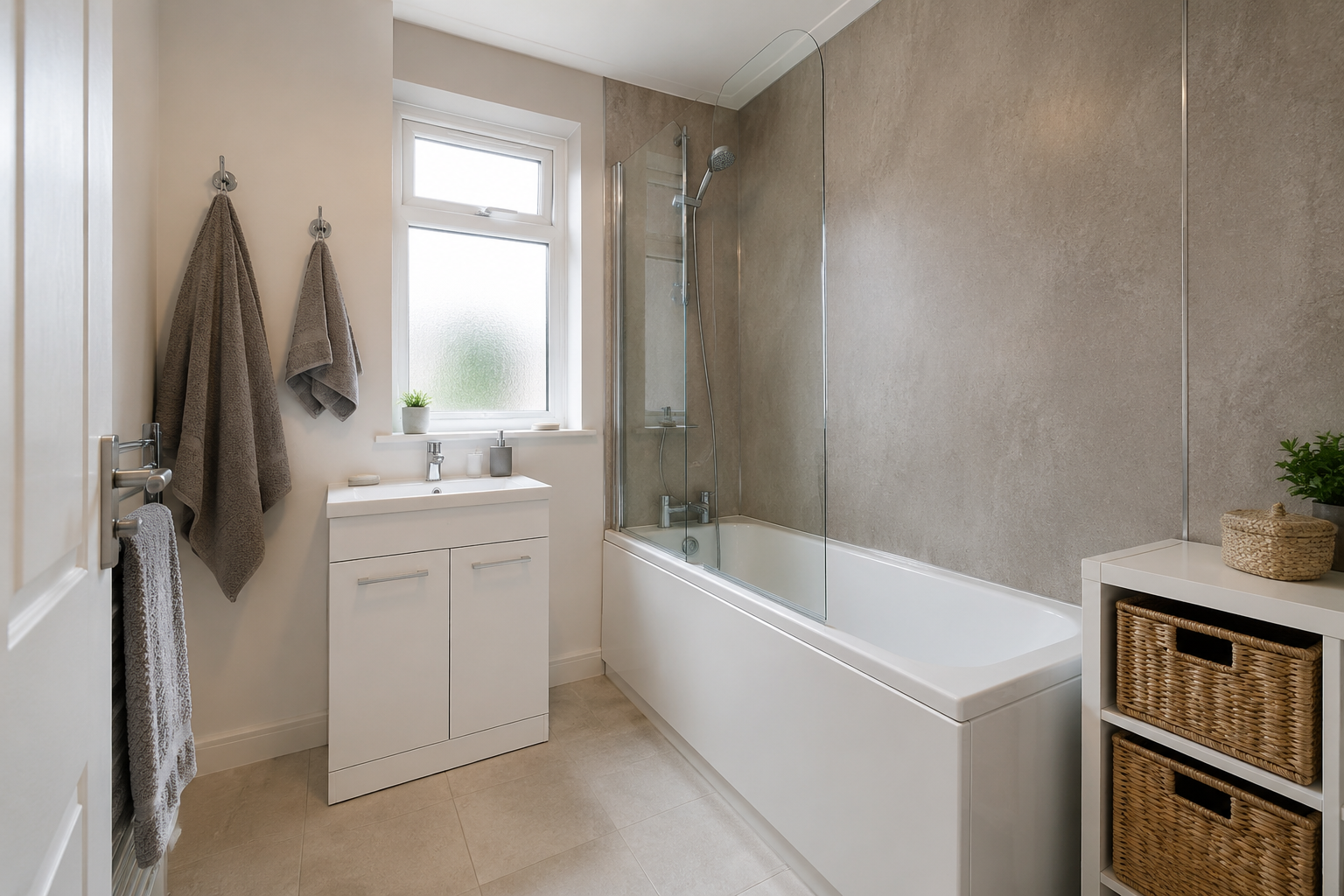
Compare Prices for the Same Details
Ask for separate written options if you are undecided. Both should name the panel range, covered walls, preparation, trims and fitting work. Check whether painting, screen removal, waste disposal and moving accessories are included. The difference is not simply the cost of extra boards; more coverage can mean more cuts, corners and time around furniture. Conversely, a mixed finish may involve decorating work that a full-panel option does not. Comparing complete jobs makes the trade-off clearer and avoids deciding from an incomplete materials estimate.
Think About Cleaning and Future Changes
Panels around the whole room can make more walls easy to wipe, but cupboards and other fittings still affect access for cleaning. Shower-only panels leave more flexibility to change the colour of painted areas later. Think about which look you are likely to want to update and how easily you can reach the edges. Keep product names and spare material where practical. If a future basin or vanity is a different size, the wall behind it may become visible, so discuss coverage behind fittings before deciding to leave hidden areas unfinished.
Agree the Coverage Before Ordering
Mark the panels on a simple room plan, including their height and the treatment of windows, doors and exposed ends. Confirm which fittings stay and which come out. If you choose shower-only coverage, ask who finishes the surrounding walls. If you choose full-room panels, check every corner and access point is accounted for. The final choice should reflect the wall condition, your preferred appearance and the work you are willing to undertake. A precise written plan makes either approach easier to price, fit and check when the bathroom is finished.