Bring Real Samples Together
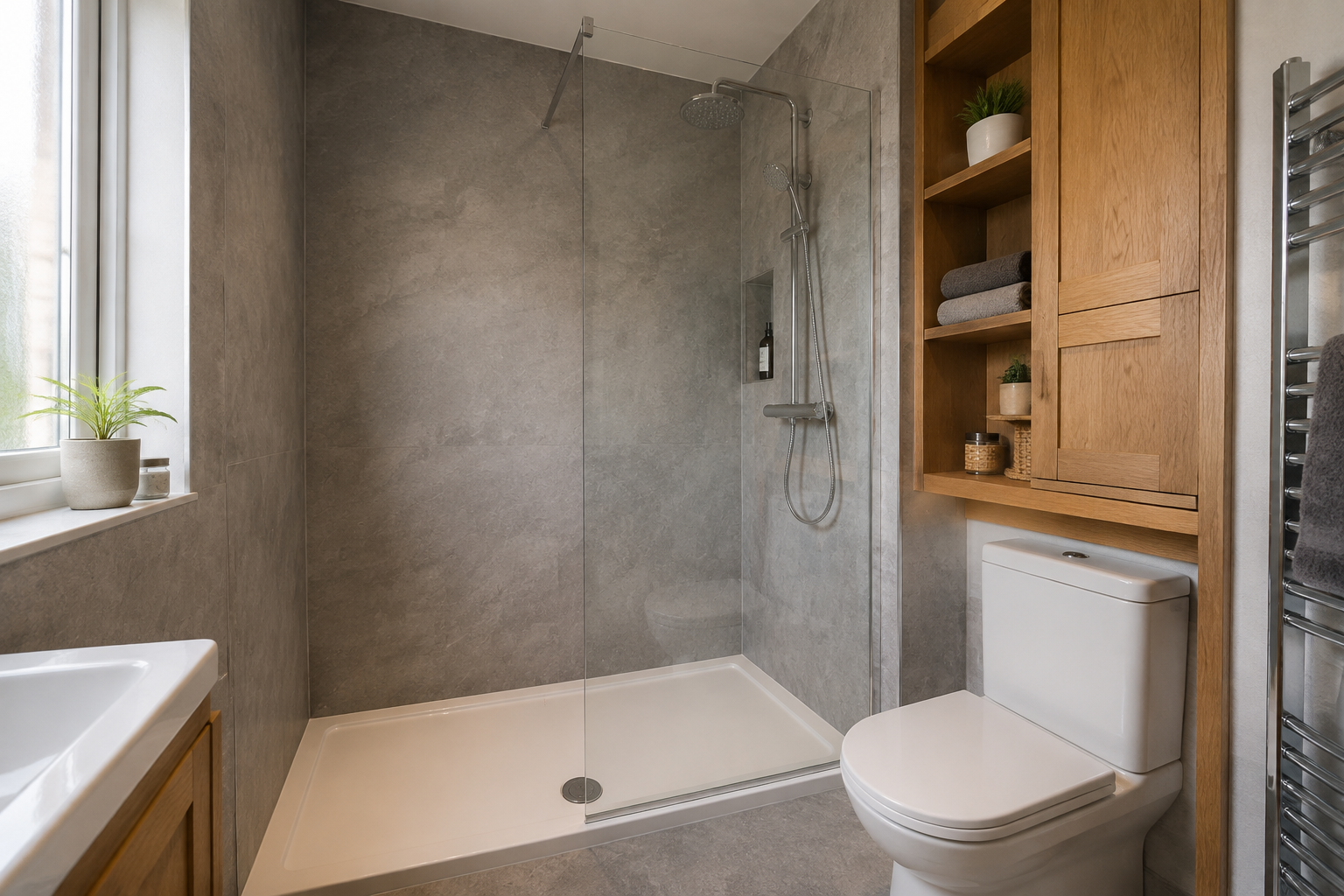
A wall panel and floor can both look attractive separately yet feel mismatched in the same room. Put their samples side by side before ordering and check them against the bath and vanity too. Look at the combination in your bathroom rather than relying entirely on a showroom display. Light changes the appearance of greys, beiges and whites, and a photograph may hide those differences. You do not need the two surfaces to be identical. You need to understand whether you are choosing a close match or a clear contrast and be happy with that result.
Check Warm and Cool Colours
Some grey finishes have blue tones, while others lean towards brown or beige. A cream panel can make a cool white floor look quite different beside it. Hold the samples together under daylight and the bathroom lights, looking at the background colours rather than only the pattern. If a combination feels wrong, try changing one surface before discarding both. A more neutral floor can sometimes work with the panel you already prefer. Colour descriptions from different manufacturers are not standardised, so do not assume two products called limestone or silver will naturally match.
Choose Which Surface Has the Main Pattern
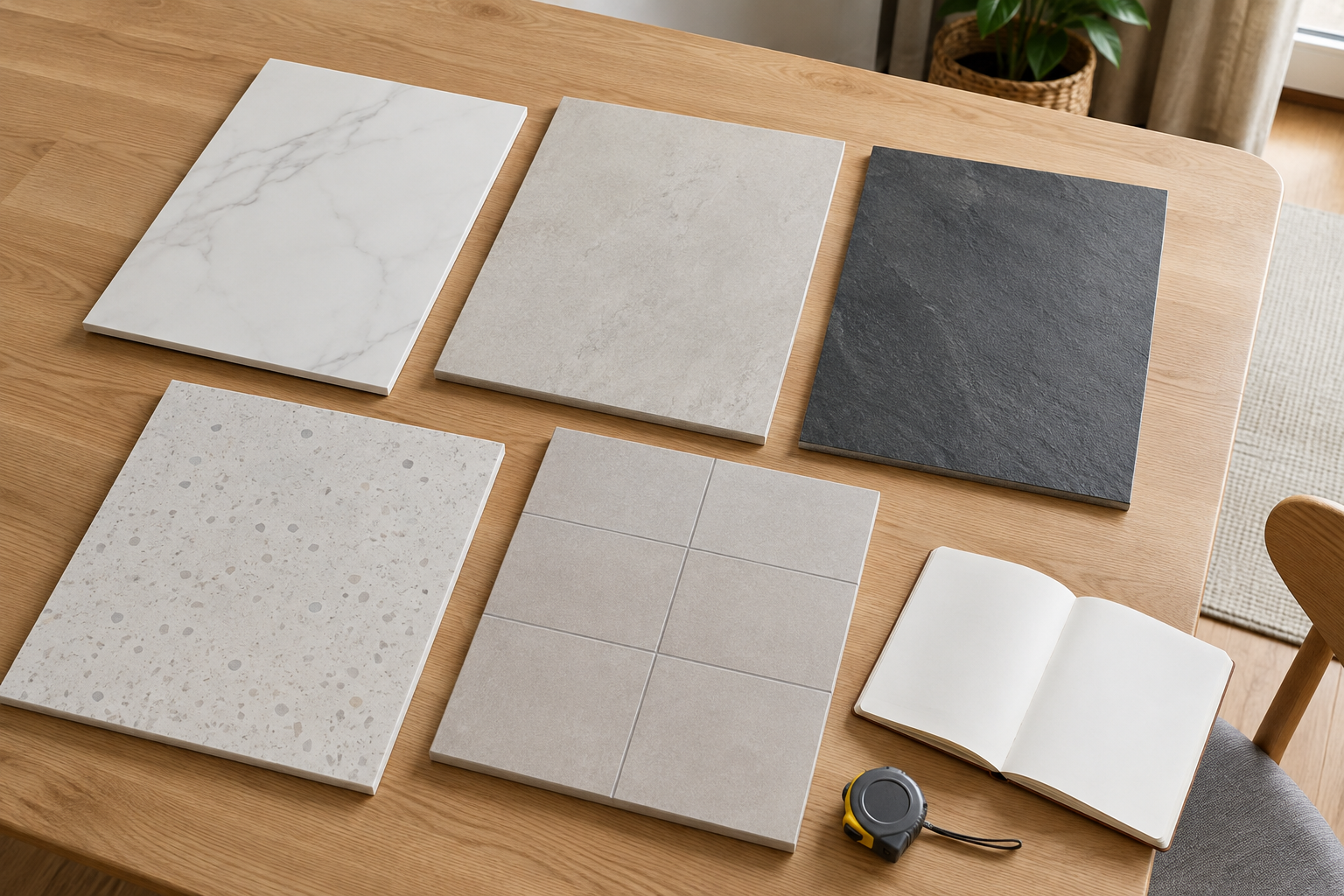
A bold marble wall, busy terrazzo floor and strong wood vanity can compete in a compact room. Decide which surface you want to notice most. A simpler floor may suit a large vein pattern, while a plain panel can work with a patterned floor. You may prefer more detail, but compare it across the whole room before committing. Full-board pictures and a few floor pieces can help. The aim is to see how the surfaces work together, not to impose a rule that every bathroom must contain only one colour or texture.
Compare Apparent Tile Sizes and Lines
Tile-effect panels can introduce a grid on the wall even though the apparent joints are printed or formed. If the floor also has a strong tile grid, check how the line sizes and colours relate. They do not need to line up perfectly, but a near-match can look accidental if it is slightly out. Ask how the wall pattern will be cut around corners and fittings. The floor layout may also need planning at the doorway and shower. Looking at those positions in advance avoids making the decision from samples that never show the actual cut edges.
Choose Flooring for Bathroom Use
Appearance is only part of the floor choice. The product must be suitable for the intended bathroom conditions and installed on a properly prepared base. A shower floor has different requirements from a dry area beside the basin. Ask about water exposure, cleaning, underfloor heating compatibility where relevant and the surface grip appropriate to the household. Product claims and fitting instructions should be checked for the exact range. Do not assume a wall panel design can simply be used on the floor because the colours match or because both products are described as waterproof.
Plan the Wall-to-Floor Edge
The join at the bottom of the wall needs to work with the panel and flooring systems. Ask how it will be finished and whether a trim, seal or other detail is required. The fitting sequence matters because one surface can affect access to the other. Changes in floor thickness may alter door clearance, toilet connections or the height beside a shower tray. Make those decisions before panels are cut to their final length. A clear plan helps avoid an improvised strip at the bottom of the wall after the main materials have been fitted.
Use Furniture as the Third Main Material
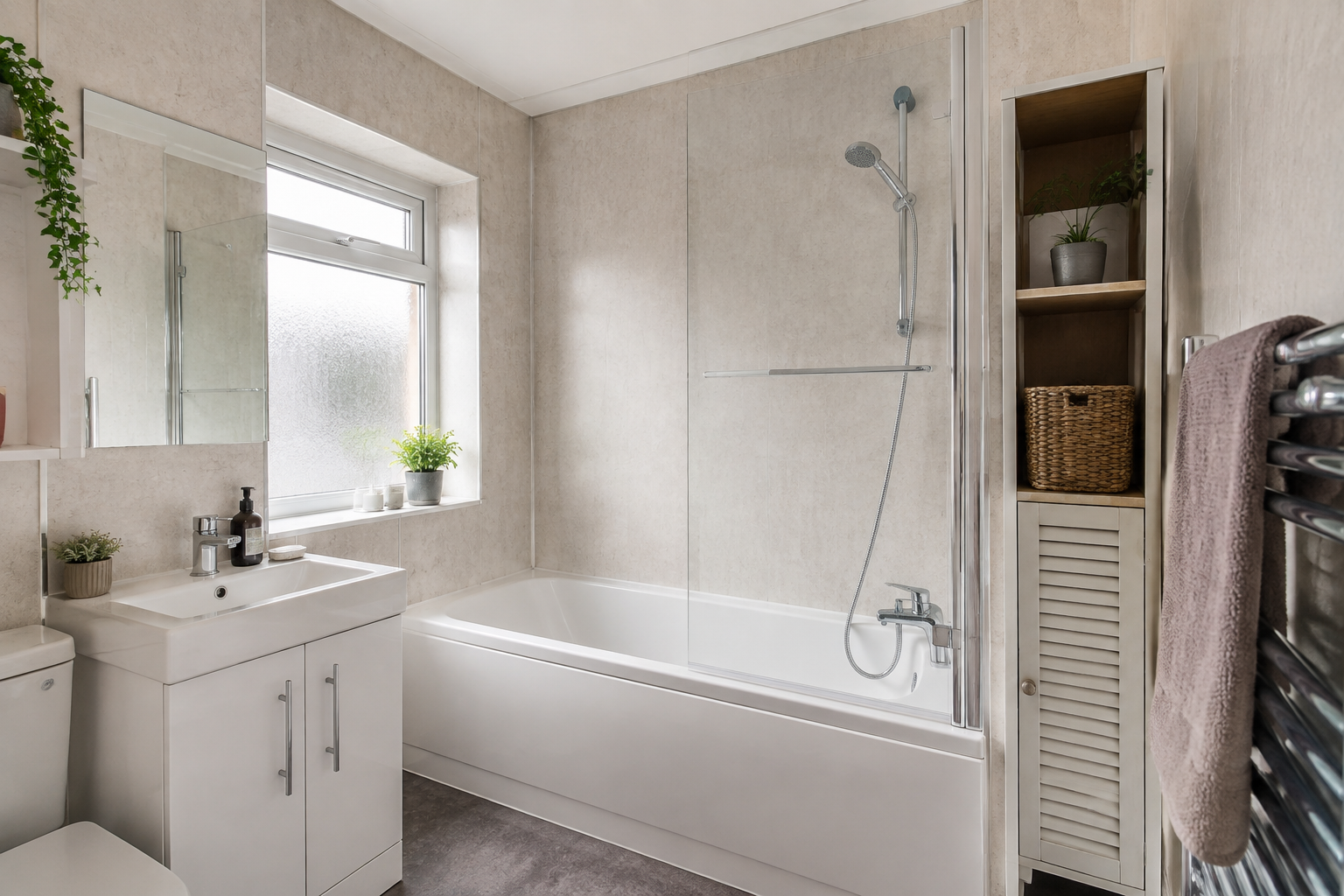
The vanity often sits between the wall and floor, so its colour can help connect them. Wood furniture may add warmth beside grey stone, while a plain white unit can give a clear break between two stronger finishes. Check cupboard depth and opening space before choosing purely for appearance. Storage that works well will keep the surfaces less cluttered, making the planned combination easier to see. Include the basin and worktop in the sample check because their whites or stone patterns may introduce another colour that changes how the room looks.
Think About Cleaning and Wear Together
The wall and floor may need different cleaners and care routines. Keep both sets of instructions and check that a product used on one surface will not damage the other if it splashes. Consider where water collects after a shower and whether mats, screens or a different layout would help keep it contained. A very glossy surface may show marks differently from a textured one. Ask about replacing damaged pieces and keep the product references. Choosing materials you can maintain comfortably is as useful as finding colours that look good on the day of installation.
Record the Final Product Choices
Before accepting the final quote, confirm the exact wall panels, floor range, colour codes and finishing pieces. Check the quantities and who supplies each item, especially if you are buying some products yourself. Keep samples until the materials arrive so obvious differences can be raised before fitting. Ask the installer to confirm the preparation and sequence for both surfaces. A coordinated bathroom does not depend on an expensive matching collection. It depends on a combination you have checked in the room, with products suited to their positions and fitting details that have been agreed in advance.